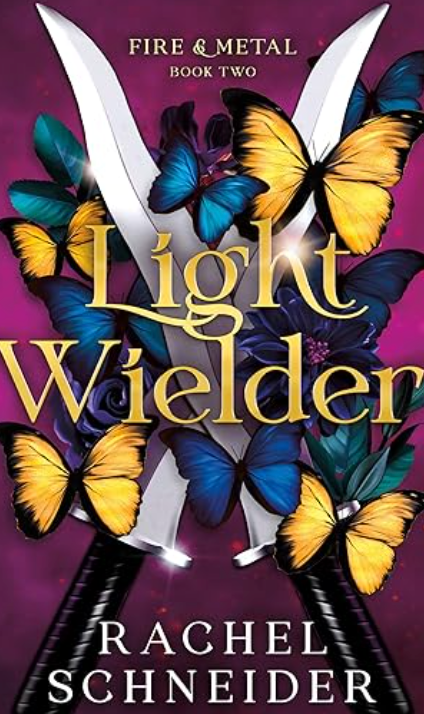
It’s been four years since Jovie betrayed Acker, fracturing their relationship. Her decision to take King Edmond’s magic, sparing his life at Acker’s request, has sparked a brutal war. The Kenta and Strou forces ally against the Roison and Alaha, with Maile perched dangerously on the edge of their battles. Jovie is determined to keep the innocent Maile people from a conflict she helped start—even if it means suppressing the Matching Bond and sacrificing any hope of repairing her relationship with Acker. Yet, visions of him continue to haunt her dreams. Acker is resigned to aid in his father’s war while in an arranged marriage with a wife who detests him. Though still pained by Jovie’s deception, he can’t stop his thoughts from turning to her. And Acker has found a way to slip into Jovie’s dreams despite her attempts to stifle the Matching Bond. There he watches her, torn between his loyalties and desire. When he discovers the chilling reason behind the return of his father's magic, as well as Edmond’s dangerous new alliance, Acker must finally decide which war he wants to fight: the one for his king or the one for his heart.
Light Wielder is a high-emotion romantasy sequel that takes the betrayal twist of Metal Slinger and refuses to let anyone escape its consequences, turning forbidden love into a battlefield where loyalty, power, guilt, and desire all draw blood.
Who This Book Is For
This is for readers who finished Metal Slinger furious, heartbroken, or obsessed and immediately needed to know whether Jovie and Acker could survive what the first book did to them. Light Wielder is not designed as a casual entry point. It is a sequel built for readers already invested in the Fire & Metal world, its warring kingdoms, its elemental magic, and especially the romantic wreckage left behind by Jovie’s choices.
It is especially for romantasy readers who enjoy love stories where the couple’s problem is not mere miscommunication, but political catastrophe. Jovie did not simply lie. She made a choice that changed the balance of power, spared a dangerous king, shattered Acker’s trust, and helped ignite war. That gives the romance a sharper edge than the usual “will they forgive each other?” arc. Forgiveness here is not only emotional. It has military, moral, and national consequences.
Readers who like enemies-to-lovers turning into lovers-to-enemies-to-something-worse, high-stakes political fantasy, magical inheritance, battlefield angst, courtly betrayals, and morally compromised heroines will likely find this sequel compelling. It belongs to the current wave of romantasy that understands love is most addictive when it is not safe, not clean, and not obviously righteous.
Who This Book Is Not For
This is not for readers who disliked the major twist of Metal Slinger and felt personally cheated by the narrative strategy. Light Wielder is not a retreat from that twist; it is an expansion of it. If the first book’s reveal made you feel that the story broke faith with the reader rather than deepened the characters, this sequel may not win you back. It depends on your willingness to accept betrayal as foundation rather than flaw.
It is also not for readers who want cozy romantasy, neat moral categories, or a heroine whose choices are always easy to defend. Jovie is not written to be universally adored. She is a protagonist whose love, fear, loyalty, and survival instincts can create devastation. That makes her interesting, but not always likable.
And if you prefer fantasy romance where worldbuilding takes a back seat to banter, this may feel heavier than expected. The sequel widens the conflict into war, alliances, magical consequences, and kingdom-level stakes. The romance remains central, but it is no longer sealed off from history.
Three Reasons to Recommend It
First, the sequel understands that betrayal is only interesting if it has aftermath.
Many romantasy books use betrayal as a cliffhanger and then rush to either forgiveness or revenge. Light Wielder’s strongest promise is that it lets betrayal become infrastructure. Four years have passed. The wound is not fresh in the simple sense; it has had time to harden into politics, memory, resentment, and identity.
That time jump is a smart move. It prevents the sequel from becoming a direct continuation of emotional screaming. Instead, Jovie and Acker meet the consequences of who they became after the break. They are not just lovers separated by one terrible decision. They are people living in a world that has reorganized around that decision.
This is where the book’s romantic tension gets its force. Acker cannot simply “get over it,” because Jovie’s betrayal was not private. Jovie cannot simply apologize, because apology does not undo war. Their love has been dragged out of the bedroom and into the map room. That is exactly the kind of escalation a sequel needs.
Second, Jovie is a more interesting heroine because the book does not fully sanitize her.
The modern romantasy heroine is often allowed to be “morally gray” only in ways that still flatter the reader. She kills villains, defies tyrants, makes hard choices, and is ultimately proven right. Jovie is more unstable than that. Her decision to take Edmond’s magic while sparing his life is both mercy and disaster, love and weakness, strategy and mistake.
That ambiguity gives Light Wielder its emotional charge. Jovie’s problem is not that she lacks feeling. It is that her feelings are too consequential. Love makes her dangerous. Mercy makes her dangerous. Loyalty makes her dangerous. In a fantasy market crowded with heroines described as fierce, Jovie is compelling because the book allows her fierceness to be costly rather than ornamental.
The sharper reading is this: Jovie is not punished for being powerless. She is punished for having power and using it imperfectly. That is a better conflict than simple victimhood. It makes her harder to defend, but also harder to forget.
Third, the Acker-Jovie dynamic turns romance into a question of political ethics.
Acker’s central dilemma is not merely whether he still loves Jovie. The publisher’s description frames his choice as a conflict between the war for his king and the war for his heart. That is a classic romantasy formulation, but it works because the personal and political stakes are genuinely entangled.
Acker’s love for Jovie is not a soft subplot floating beside the war. It is part of the war’s moral weather. If he chooses duty, he may lose the person who still matters most. If he chooses love, he risks betraying the structures and loyalties that define him. That makes him more than a brooding love interest. He becomes a man caught between public allegiance and private devastation.
The best romantasy does not ask “love or kingdom?” as a decorative question. It asks what kind of person a character becomes when either answer is a betrayal. Light Wielder appears to understand that. Its romance is attractive because it is not innocent.
One Reason to Hesitate
The series’ biggest strength is also its most divisive wound: the first book’s twist changed the contract with the reader.
Metal Slinger’s reputation is built partly on the intensity of its final reveal. Some readers loved being blindsided. Others felt manipulated, arguing that the twist made earlier emotional investment feel less earned. Light Wielder inherits that controversy. It cannot avoid it, because the entire sequel depends on the reader accepting that the shock was not a cheap trick but the beginning of the real story.
That is a dangerous bet. If you believe the twist was bold, Light Wielder becomes the payoff. If you believe the twist was under-foreshadowed, Light Wielder may feel like an attempt to build a cathedral on a cracked foundation.
The sequel’s challenge is therefore not only to resolve plot. It must rebuild reader trust while dramatizing broken trust between its characters. That is fascinating, but it is also a high-wire act.
Editor’s Review
Light Wielder arrives with an unusually heavy burden for a romantasy sequel. It is not merely the second half of a duology. It is the trial of the first book’s most controversial choice. Metal Slinger became a breakout hit because it delivered exactly what the romantasy market loves: immersive fantasy, heated romance, suspense, elemental magic, and a twist engineered to detonate reader expectations. But detonation is easy. Reconstruction is harder.
That is why Light Wielder is interesting before one even opens it. The book must answer a question more sophisticated than “What happens next?” It must answer: “Was the betrayal worth it?”
The premise suggests that Schneider understands the scale of that question. Four years have passed since Jovie fractured her relationship with Acker. Her choice to take Edmond’s magic but spare his life did not freeze at the level of romance-drama. It metastasized into war. Kingdoms are now aligned, borders are unstable, and personal guilt has become geopolitical fact. This is exactly what a sequel should do: enlarge the meaning of the first book’s ending without pretending the hurt can be patched with chemistry alone.
The central pleasure of Light Wielder is likely to be its refusal to let love remain morally clean. Jovie and Acker are compelling because their bond is not merely obstructed by external villains. They are obstructed by choices they made, values they hold, and loyalties they cannot easily abandon. That is better than a simple star-crossed romance. Star-crossed lovers are often innocent victims of circumstance. Jovie and Acker are not innocent in that easy way. They have agency. They have damage. They have blood on the emotional floor.
Jovie, in particular, is the book’s great risk. She is the kind of heroine who will split readers. Some will see her as brave, loving, trapped, and forced into impossible decisions. Others will see her as the reason everything fell apart. The strongest version of Light Wielder would not try to settle that debate too neatly. It would let her remain difficult. Romantasy does not need more perfect heroines with swords. It needs heroines whose choices create arguments.
Acker’s arc, meanwhile, is positioned around divided loyalty. That may sound familiar, but the familiarity is not a flaw if the emotional math is sharp. His father’s magic, Edmond’s new alliance, his king, Jovie, and the war itself all seem to pull him into competing definitions of duty. The question is not whether he loves Jovie. The question is whether love can survive when it becomes indistinguishable from treason.
That is the good stuff. That is why this sequel has the potential to be more than a commercially packaged romantasy follow-up. It can become a story about the moral cost of attachment.
Still, Light Wielder is walking into a hostile courtroom. The readers who hated Metal Slinger’s twist will not be easy to persuade. They will look for foreshadowing, emotional accountability, and structural payoff. They will not forgive the sequel if it uses war as spectacle while dodging the harder work of reckoning. The readers who loved the twist, meanwhile, will want the emotional violence to mean something. They will want devastation, but not randomness. Pain, but not cheapness.
That is the real editorial test. A twist can make a book famous. Consequence is what makes a series endure.
The Fire & Metal world also needs to keep earning its scale. Names like Kenta, Strou, Roison, Alaha, and Maile suggest a widening political map, but names alone do not equal worldbuilding. The sequel has to make its alliances feel lived-in rather than decorative. Romantasy readers will forgive a lot if the romance burns hot enough, but a war plot demands more than banners and capitalized factions. It needs motive, texture, and cost.
Sharp verdict: Light Wielder is built for readers who want their romantasy emotionally bruising, politically messy, and romantically unsafe. It is not comfort food unless your idea of comfort is watching two people who love each other stand on opposite sides of a disaster they helped create.
Its success depends on whether Schneider can transform the first book’s shock into lasting consequence. If she can, Light Wielder may become the rare sequel that makes its predecessor’s most divisive move feel necessary. If she cannot, it will confirm the suspicion of skeptics who saw the twist as manipulation rather than architecture.
But the premise has teeth. War, magic theft, mercy gone wrong, divided kingdoms, old love turned dangerous—these are strong ingredients. Light Wielder is not asking whether love can conquer all. It is asking whether love deserves to survive after it has already helped ruin everything.




 千斤顶
千斤顶











 English
 简体中文
简体中文 繁體中文
繁體中文 한국 사람
한국 사람 日本語
日本語 Deutsch
 русский
 بالعربية
 TÜRKÇE
 português
 คนไทย
คนไทย french