“You think she needs you,” he says. “I know she does.” “And what if she doesn’t want this kind of protection?” “She will,” I say, my voice lowering slightly. “Because she needs a man who can give her the world.” “And if the world burns?” My hand tightens subtly at Violet’s waist. “Then I’ll build her a new one,” I reply. “Even if I have to burn the old one down myself.” I don’t work for Rowan Ashcroft. I work beneath him.
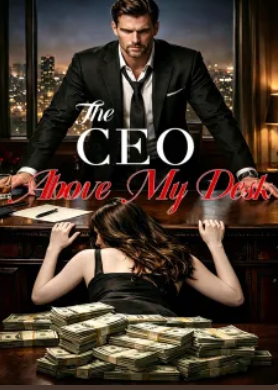
The CEO Above My Desk is a high-tension office romance wrapped around a missing-person mystery, built for readers who want their billionaire fantasy sharpened by danger, debt, surveillance, workplace politics, and a hero whose “protection” often looks one bad decision away from control.
Who This Book Is For
This is for readers who like dark contemporary romance, cold CEO heroes, boss-and-employee tension, slow-burn obsession, protective alpha behavior, and heroines who are competent under pressure rather than passively waiting to be rescued.
It will especially suit readers who enjoy office romance with suspense: the kind of story where the romance is not happening in a vacuum, but inside a collapsing personal life, a corporate power structure, and a criminal thread involving a missing brother.
Who This Book Is Not For
This is not for readers who need a soft, healthy, low-conflict romance. Rowan Ashcroft is not written as a cozy book boyfriend; he is possessive, controlling, and morally gray by design. If power imbalance, workplace hierarchy, surveillance-coded protection, obsessive male attention, or R18 dark-romance framing bothers you, this one will likely feel more suffocating than seductive.
It is also not ideal for readers who want literary subtlety or polished traditional-publishing restraint. This is app-native fiction: fast, dramatic, hook-heavy, addictive, and sometimes blunt in its emotional signals.
Three Reasons to Recommend It
1. Violet is the real engine of the book, not Rowan.
The title sells the fantasy of the dangerous CEO above the desk, but the story works because Violet Pierce is not simply a woman being stared at by power. She is a gatekeeper. She controls access, filters chaos, reads threats, manages egos, and keeps Ashcroft Industries functioning while her private life is cracking under unpaid rehab bills, a missing brother, and police suspicion.
That is the book’s cleverest move. Violet is “beneath” Rowan in the company hierarchy, but in practice she is the pressure valve that keeps his empire from exploding. The romance becomes compelling because Rowan is not just attracted to her beauty or vulnerability; he is forced to recognize competence. She is useful before she is desired, and the story understands how dangerous that recognition can become when a powerful man mistakes indispensability for ownership.
2. The romance has heat because it treats attention as a threat.
Many CEO romances confuse dominance with charisma. The CEO Above My Desk is more interesting because it makes Rowan’s attention feel double-edged from the beginning. Being ignored by him is dehumanizing; being noticed by him is worse. That is a strong dark-romance premise.
The reader comments across platforms repeatedly circle the same reaction: people are hooked by the tension, the suspense, Rowan’s protectiveness, and Violet’s ability to keep going when she is emotionally cornered. That response makes sense. The story is designed around pressure: unanswered calls, locked doors, financial deadlines, police contact, corporate enemies, jealous coworkers, and a hero whose silence can feel more intimate than another man’s confession.
At its best, the book understands that obsession is not automatically romantic. It becomes romantic only because the fantasy asks the reader to stand inside Violet’s exhaustion: what if the man watching you too closely is also the only person powerful enough to stop the world from crushing you?
3. The suspense thread gives the office romance actual stakes.
The missing brother plot matters because it prevents the book from becoming pure glass-wall billionaire theater. Drew’s disappearance, Detective Calder’s suspicion, the dockside clues, and the broader sense of criminal pressure give Violet’s choices consequence. Her job is not just a setting; it is leverage. Her money problems are not just tragic backstory; they shape what she can afford to refuse.
This is where the novel separates itself from flatter “cold CEO melts for poor girl” stories. Rowan’s power is attractive, but it is also structurally dangerous. Violet needs money, stability, information, and protection. Rowan can provide all of that, which means every romantic beat carries a transactional shadow. That shadow is exactly what makes the book readable. It gives the fantasy teeth.
One Reason to Walk Away
The book’s biggest weakness is that it leans very hard into the possessive-protector fantasy, sometimes hard enough that readers outside the dark-romance lane may find the emotional framing uncomfortable.
Rowan’s intensity is the selling point, but it is also the risk. The story wants his control to feel dangerous and desirable at once, and for many readers that will work. For others, the line between “protective” and “proprietary” will feel too thin. The app-serial format also shows in places: heightened chapter hooks, occasional rough edges, and a reading experience shaped by locked chapters, ads, or platform friction rather than the smoothness of a traditionally edited novel.
Editor’s Verdict
The CEO Above My Desk is not subtle, but it is effective. It knows exactly what appetite it is feeding: the fantasy of being seen by someone terrifyingly powerful at the precise moment your life has become too heavy to carry alone.
Its strongest idea is not “what if your boss desired you?” That would be ordinary. Its stronger idea is “what if your boss finally noticed the cost of your competence?” Violet is the kind of heroine app-romance readers respond to because she is not fragile in the decorative sense. She is brittle from overuse. She has been making herself functional for so long that survival has become a personality. Rowan’s obsession lands because he sees both the machine and the damage inside it.
That said, the novel should be read as dark romance, not as a model of healthy workplace intimacy. Its pleasure comes from exaggeration: billionaire authority, emotional captivity, crisis romance, corporate danger, and the seductive fantasy that one ruthless man can rearrange reality around a woman who has run out of options. The book is at its most interesting when it lets that fantasy remain morally uneasy instead of pretending it is harmless.
Reader response supports the appeal: comments repeatedly praise the suspense, the addictive pacing, the Violet-Rowan tension, and the sense that each chapter pulls the reader into the next. The popularity numbers are also strong across app listings, with AnyStories showing over two million views and 234 chapters, while NovelFlow lists the book as completed with a 5.0 rating and a large review count.
The sharp verdict: this is premium app-romance bait, but in the best sense. It is engineered for compulsion, full of red flags polished until they shine, and anchored by a heroine strong enough to make the billionaire fantasy feel less like rescue and more like a hostile merger of two damaged survival systems.
Research sources checked: AnyStories, NovelFlow, Readink, and related Reddit discussion.




 千斤顶
千斤顶











 English
 简体中文
简体中文 繁體中文
繁體中文 한국 사람
한국 사람 日本語
日本語 Deutsch
 русский
 بالعربية
 TÜRKÇE
 português
 คนไทย
คนไทย french