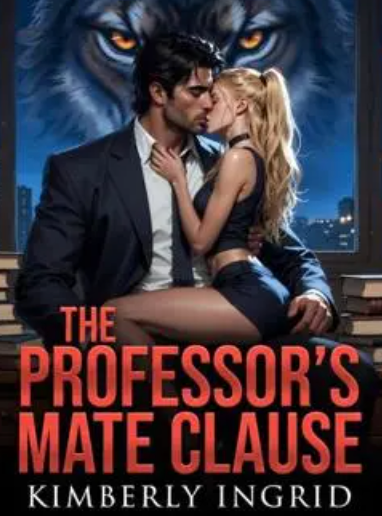
He's my professor. He's dangerous. But he says I'm his destiny. I walked in on my boyfriend cheating. And he told me he's marrying someone else. Then a note appeared on my door-from my professor, Adrian Metcalfe. Adrian watches me in class like he knows something, but I don't. Now he wants me to be his date to my ex's wedding. Fake revenge, he says. Just one night. But nothing about Adrian is fake. When wolves attack us at the wedding, he shifts into one of them. The legendary werewolves are real, and i turn out to be one of them. And he says we're mates. My mother was murdered to keep this secret. His enemies are hunting me. And the man I'm supposed to trust? He's been lying to me since the day we met..... Whom am i gonna trust?
The Professor’s Mate Clause is a high-drama werewolf romance that throws betrayal, forbidden attraction, fated-mate obsession, academic power imbalance, and revenge-flavored emotional chaos into one unapologetically addictive package.
Who This Book Is For
This is for readers who like their paranormal romance fast, messy, possessive, and emotionally overheated. If you enjoy werewolf mate bonds, forbidden professor-student tension, cheating ex-boyfriends, dominant supernatural love interests, multiple POV chapters, jealous confrontations, and heroines who are humiliated before they are desired, The Professor’s Mate Clause is operating directly in your lane.
It is especially suited to readers who treat web romance less as polished literary realism and more as emotional spectacle. The novel begins with a blunt, almost soap-operatic wound: Freya walks in on Kelvin betraying her in her own bed. From there, the story pivots toward Adrian, the dangerous professor figure who claims a far more primal connection to her. That is the core pleasure of the book: a heroine publicly discarded by one man becomes privately, dangerously, almost mythically claimed by another.
Readers who enjoy MoboReader-style werewolf romance will recognize the ingredients immediately. The book is not trying to reinvent the genre. It is trying to deliver the hits: betrayal, humiliation, desire, destiny, dominance, secrets, and the slow conversion of pain into leverage.
Who This Book Is Not For
This is not for readers who are uncomfortable with power imbalance as a romantic device. The professor/mate dynamic is the selling point, but it is also the red flag. Adrian’s appeal depends on danger, authority, secrecy, and a possessive supernatural claim that complicates ordinary consent and autonomy. Readers who need romance to unfold on emotionally equal ground may find the fantasy more claustrophobic than seductive.
It is also not for readers looking for subtle prose, slow-burn realism, or a heroine whose healing is quiet and self-directed. The Professor’s Mate Clause belongs to the louder end of paranormal romance: dramatic entrances, wounded interior monologues, charged dialogue, emotional reversals, and attraction that often arrives before common sense has had time to file a complaint.
And if you dislike cheating-trigger openings, jealous exes, or “he hurt me, now someone more powerful wants me” wish fulfillment, this book will probably feel too familiar or too manipulative.
Three Reasons to Recommend It
First, the opening understands the ugly efficiency of betrayal.
The first chapter’s hook is not delicate, but it is effective. Freya does not receive a polite breakup, a vague emotional distance, or a slow realization. She walks straight into the scene no betrayed partner wants to see. The cruelty is immediate, visual, and humiliating. In web romance terms, that is not subtle writing; it is ignition.
The reason it works is that betrayal in this kind of story is never only about heartbreak. It is about status. Freya is not just wounded because Kelvin cheats. She is wounded because the betrayal happens in a space that should have been hers. Her bed, her room, her expectation of safety—all of it is contaminated. That gives the later mate dynamic its charge. Adrian does not merely represent new desire. He represents a counterclaim against humiliation.
That is the central emotional fantasy of the novel: what if the person who was treated as disposable turned out to be destined, wanted, and powerful in a way her betrayer could never understand?
Second, Adrian is built as a fantasy of authority with teeth.
The professor angle is doing a lot of work here. Adrian is not only a supernatural mate; he is also an institutional authority figure. That makes the romance more dangerous, more taboo, and frankly more marketable. The book’s tagline-style premise—he is my professor, he is dangerous, he says I am his destiny—knows exactly what buttons it is pressing.
The interesting part is not that Adrian is “safe.” He is not. The interesting part is that the book sells him as a corrective danger. Kelvin’s betrayal is cheap, selfish, and humiliating. Adrian’s danger is framed as focused, protective, and fated. That contrast is classic paranormal romance logic: one man uses desire to degrade the heroine; another uses desire to elevate and claim her.
A more restrained novel would interrogate that fantasy more aggressively. The Professor’s Mate Clause mostly indulges it. But within its own genre lane, the indulgence is the point. Adrian is written for readers who want the thrill of a man who should be off-limits, who holds power, who knows more than he says, and who treats the heroine not as a mistake but as an inevitability.
Third, the multiple POV structure keeps the melodrama moving.
The visible chapter list shows repeated shifts among Freya, Adrian, Kelvin, and Clara. That is a smart structure for this kind of serial romance. It allows the book to keep feeding the reader different emotional currencies: Freya’s pain and confusion, Adrian’s restrained desire or possessive certainty, Kelvin’s regret or ego, and Clara’s role in the wider social/emotional fallout.
In a one-POV version, the story might become too trapped inside Freya’s hurt. With multiple POVs, the betrayal becomes a social event rather than a private wound. Everyone gets a stake. Everyone gets a version. The reader is invited not only to ask “Will Freya choose Adrian?” but also “How badly will Kelvin realize what he lost?” and “Who else is watching the power shift?”
That is exactly the kind of architecture that keeps serialized romance addictive. It turns emotional recovery into public reversal. Freya does not simply move on. The narrative makes sure other people have to witness her becoming desirable, protected, and central.
One Reason to Hesitate
The novel’s fantasy depends on tropes that are powerful but ethically messy.
The fated-mate bond, professor-student tension, possessive male lead, cheating trauma, and “dangerous man says you belong with me” structure are all genre magnets. They are also all pressure points. The book’s appeal comes from intensifying vulnerability until desire feels like rescue. That can be delicious in fiction, but it can also flatten Freya’s agency if the story leans too hard on destiny and dominance.
The sharper criticism is this: The Professor’s Mate Clause sometimes risks replacing one kind of male control with another. Kelvin humiliates Freya by treating her as disposable; Adrian risks overwhelming her by treating her as inevitable. For readers who enjoy fated-mate romance, that inevitability is the fantasy. For readers who want the heroine’s selfhood to matter more than the bond, it may feel like the cage has simply been upgraded.
Editor’s Review
The Professor’s Mate Clause is not a subtle book, and judging it as though it wanted to be one would miss the point. It belongs to a highly commercial corner of paranormal web romance where emotion is not shaded in watercolor; it is written in lipstick, claw marks, and slammed doors. The book opens with betrayal because betrayal is the fastest way to strip a heroine down to the question that drives this entire genre: who sees her value when the wrong man has made her feel worthless?
Freya’s humiliation is the novel’s fuel. Kelvin’s betrayal is not just a breakup device; it is the moral permission structure for the fantasy that follows. Once he wounds her, the reader is primed to accept, even crave, an answering force. Adrian enters that emotional economy as both temptation and correction. He is older, more powerful, more dangerous, and more certain. Where Kelvin is selfishly physical, Adrian is mythically physical. Where Kelvin cheats, Adrian claims. Where Kelvin makes Freya feel replaceable, Adrian makes her feel cosmically selected.
That is potent. It is also troubling, which is what gives the premise its bite.
The book’s best commercial instinct is its refusal to let romance remain purely romantic. Every attraction is also a status event. Every desire has social consequences. The professor angle is not merely taboo seasoning; it brings hierarchy into the room. The mate bond is not merely destiny; it turns attraction into biological law. The cheating ex is not merely backstory; he gives the story a live audience for Freya’s transformation.
This is why the novel has the kind of addictive readability that often powers mobile romance platforms. It understands reversal. The heroine begins in a position of degradation. The plot then begins rearranging the world so that her degradation becomes a setup for elevation. That is the satisfaction. Not realism. Reversal.
The weakness is that this machinery can be too visible. The early chapters, from what is publicly available, lean heavily on familiar triggers: the cheating scene, the dangerous professor, the fated claim, the possessive pull, the alternating POVs that keep romantic tension and regret simmering. These are effective tropes, but they are not fresh by themselves. The novel’s success therefore depends on execution: whether Freya becomes more than a wounded prize, whether Adrian becomes more than a dominant silhouette, and whether Kelvin’s perspective adds complexity rather than merely punishment theatre.
The rating visible on MoboReader suggests a mixed but engaged reception rather than universal acclaim. That feels appropriate. This is the kind of book likely to divide readers sharply: one group will devour it for the emotional intensity and trope delivery; another will bounce off the power dynamics, melodrama, and genre familiarity.
Sharp verdict: The Professor’s Mate Clause is a messy, high-voltage paranormal romance that knows exactly which fantasies it is selling: betrayal answered by desire, humiliation answered by destiny, and a heroine made visible by the dangerous man who should absolutely know better. It is not refined. It is not ethically tidy. It is not pretending to be literary prestige.
But it has a hook. It has heat. It has the shameless forward motion of a story built for readers who want their werewolf romance to feel less like a courtship and more like a collision.
For readers who enjoy possessive fated-mate drama with a forbidden academic edge, this will be catnip. For readers who need consent politics, emotional healing, and power imbalance handled with surgical care, this may feel less like romance and more like a warning sign with a very attractive jawline.




 千斤顶
千斤顶










 English
 简体中文
简体中文 繁體中文
繁體中文 한국 사람
한국 사람 日本語
日本語 Deutsch
 русский
 بالعربية
 TÜRKÇE
 português
 คนไทย
คนไทย french