One-Sentence Positioning
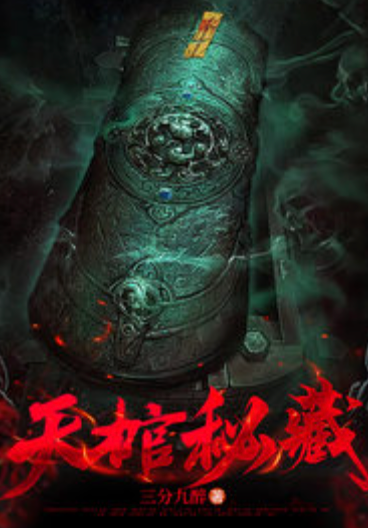
The Hidden Heavenly Coffin is a rough-edged, compulsively readable Chinese adventure thriller that fuses tomb-raiding suspense, folk metaphysics, 1990s outlaw folklore, and a coming-of-age revenge story into something less polished than prestige fiction but far more alive than most genre product.
Who This Book Is For
This is for readers who like their thrillers dirty under the fingernails: secret trades, dangerous mentors, antique scams, grave chambers, feng shui lore, wandering Jianghu figures, and protagonists who are shaped less by destiny than by poverty, grief, and bad choices. If you enjoy the folkloric density of Chinese tomb-raiding fiction but want something with a more street-level, almost oral-storytelling energy, this novel has a real pull.
It will also suit readers who are drawn to morally ambiguous survival stories. Meng Xun’s journey is not framed as a clean heroic ascent. He begins as a boy marked by bereavement and humiliation, then enters a world where loyalty, violence, superstition, tradecraft, and revenge become almost indistinguishable. The novel is at its best when it treats the Jianghu not as a glamorous playground, but as a brutal informal economy where every skill has a price and every legend is attached to someone’s blood.
Who This Book Is Not For
This is not for readers who demand literary restraint, psychological minimalism, or a slow, elegant build. The book is melodramatic, sometimes sensational, and very much written in the high-velocity grammar of Chinese web fiction. Its pleasures are immediate: a striking hook, fast reversals, eccentric figures, dangerous objects, and chapter-end momentum. Readers allergic to heightened dialogue, revenge logic, archetypal women with mythic charisma, or serialized cliffhanger structure may find it over-seasoned.
It is also not ideal for readers looking for a purely archaeological adventure. The tomb-raiding element is only one current in a larger river of Jianghu codes, occult technique, antique dealing, vendetta, and folk underworld politics. The book’s real subject is not “treasure hunting” so much as initiation: how a wounded boy becomes a name, then a legend, then finally a file-code known as “Heavenly Coffin 001.”
Three Reasons to Recommend It
First, the opening has genuine pulp electricity.
A lesser web novel would begin with a prophecy, a corpse, or a mysterious artifact. This one begins with economic ruin: a father dead in a mining accident, a family abandoned by institutions and relatives, an older brother forced out of school, and a younger brother left with a wound that is social before it becomes supernatural. That grounding matters. The later world of feng shui monkeys, iron fans, grave traps, secret titles, and tomb lore works because the story first establishes a basic emotional truth: Meng Xun does not enter the Jianghu because it is exciting. He enters because ordinary life has already failed him.
That gives the novel a sharper texture than its own marketing hook suggests. Yes, there is a glamorous sister-in-law figure, an iron fan, a compass, and the promise of hidden coffins. But beneath the genre spectacle is a very old noir engine: a boy learns that respect, money, and safety are not distributed by justice, and so he starts listening to the people who know how the unofficial world really works.
Second, Liao Xiaoqin is the book’s most dangerous asset.
The “sister-in-law mentor” premise could easily collapse into cheap provocation, but Liao Xiaoqin is more interesting than that. She is introduced through beauty, rumor, injury, and menace, but she quickly becomes the novel’s axis of power. Her glamour is not decorative; it is tactical. Her disability does not soften her; it makes her more unpredictable. Her tenderness toward Meng Xun is never fully separable from manipulation, training, and survival.
In Western review language, she is the sort of character who would be called problematic in the most productive sense: not because the writing is careless, but because the story understands that charisma is often morally contaminated. She does not simply teach the protagonist skills. She teaches him a worldview: that the folk underworld has rules, that sentiment can get you killed, and that revenge is not a feeling but a profession.
Third, the novel understands genre as atmosphere, not just plot machinery.
The most appealing thing about The Hidden Heavenly Coffin is not any single mystery. It is the density of its world. “Tomb raiding,” “Jianghu,” and “three religions and nine schools” are not just tags here; they create a social weather. The book gives readers the pleasure of obscure trades, inherited techniques, nicknames, taboos, tools, local rumors, and the sense that every person on the road may belong to some half-buried lineage of specialists.
That is where the novel’s serial form becomes a strength. Its episodic sprawl allows the world to feel crowded and half-mapped. You keep reading not only to solve the central revenge arc, but to see what strange profession, hidden debt, occult method, or regional legend will surface next. It has the appeal of a roadside storyteller who may exaggerate, contradict himself, or lean too hard on a dramatic pause, but who absolutely knows how to keep the fire burning.
One Reason to Hesitate
The same intensity that makes the book addictive also makes it uneven.
The Hidden Heavenly Coffin is not subtle, and it does not always trust silence. Emotions arrive at full volume; violence can be theatrical; character entrances sometimes feel designed for maximum short-video impact. Readers used to tighter editorial discipline may notice that the story occasionally chooses momentum over refinement and archetype over nuance.
There is also the broader issue common to long-running web fiction: accumulation can become inflation. As the protagonist rises from “Xiao Meng” to “Brother Xun” to “Master Meng” to “Heavenly Coffin 001,” the mythos naturally expands, but expansion is not always the same as deepening. The danger is that a story born from grief and grit may drift toward pure legend-management. When the book remembers the boy carrying loss on his back, it hits hard. When it only stacks titles, enemies, and secrets, it becomes more familiar.
Editorial Review
The Hidden Heavenly Coffin is not a refined literary novel pretending to be genre fiction. It is genre fiction with its sleeves rolled up, its pockets full of talismans, cigarettes, blood debts, and counterfeit antiques. That distinction matters. Its value lies less in elegance than in propulsion, less in psychological delicacy than in the raw charge of initiation.
What makes it worth discussing is the way it binds Chinese folk imagination to class trauma. The supernatural and semi-supernatural elements are not merely exotic decoration. They emerge from a world where formal systems are absent, corrupt, or irrelevant. In that vacuum, people turn to masters, trades, secret names, taboo knowledge, underground economies, and inherited rules. The Jianghu becomes an alternative civilization, both liberating and predatory.
Meng Xun’s arc works because it is built on a contradiction. He wants revenge because he loved his brother; he survives because he learns to become harder than love. The book’s best tension lies there. It asks whether loyalty can remain pure once it has been weaponized. It does not always answer gracefully, but it keeps returning to the wound.
The novel’s most commercial hook is obvious: a beautiful, lethal mentor figure hands a boy a compass, an iron fan, and a route into the underworld. But its deeper hook is more melancholy: the making of a legend is also the erasure of a person. By the time Meng Xun becomes “Heavenly Coffin 001,” the title sounds less like triumph than archival doom. A living man has been compressed into a code name. That is the bleak little insight glowing beneath the pulp fireworks.
Sharp verdict:
The Hidden Heavenly Coffin is messy, macho, atmospheric, and frequently over-the-top—but it has pulse. It understands that the best tomb-raiding stories are never only about what is buried underground. They are about what families bury, what villages whisper, what the poor inherit, and what a young man must kill inside himself before the world agrees to call him powerful.
|




 千斤顶
千斤顶










 English
 简体中文
简体中文 繁體中文
繁體中文 한국 사람
한국 사람 日本語
日本語 Deutsch
 русский
 بالعربية
 TÜRKÇE
 português
 คนไทย
คนไทย french