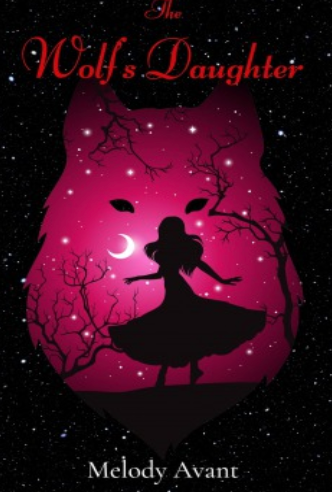
Phaedra didn't expect to be summoned to another world and become its hero, but she tried her best. She certainly didn't want to be stuck in a boy's body while she did it, but she didn't give up. She most definitely didn't want to die in the end, torn apart by the very demon she had been called to destroy. She thought her journey was done, a failure who couldn't save the world she'd been called to protect. Perhaps most unexpected of all, at least to her, was being reborn as the very daughter of the Demon Lord who had killed her. Now a sheep demon, the sole child of Fenrir, the Wolf. She's not sure what this means, what duties are still expected of her or what this means to her former allies. But when the chance comes to save a former ally of hers, she has no choice but to risk everything in order to save her. Perhaps together they can even find out what is going on in this world and why she was reborn at all. Assuming she can prove that she is more than just The Wolf's Daughter.
One-Sentence Verdict:
The Wolf’s Daughter is a compact but emotionally loaded queer isekai about a failed hero reborn as the child of the monster who killed her—a premise that could have been pure gimmick, but instead becomes a sharp story about identity, inheritance, and the terrifying politics of being loved by the wrong side.
Who This Book Is For:
This is for readers who like isekai that actually cares about the psychological consequences of reincarnation; readers drawn to trans and gender-bender fantasy; fans of demon-lord politics, found-family tension, morally complicated loyalties, and fantasy adventure where the “hero versus monster” binary is deliberately cracked open.
Who This Book Is Not For:
This is not for readers who want a long, sprawling epic with hundreds of chapters already banked, nor for those who prefer clean heroic certainty, power-level grinding, or a purely male-gaze gender-bender setup. If you want the protagonist’s identity conflict to be simple wish fulfillment, this story is likely to feel too inward, too queer, and too emotionally tangled.
3 Reasons to Recommend It:
1. The premise has a genuinely cruel elegance.
Phaedra was summoned to another world as its hero, forced to fight in a body that already complicated her sense of self, and then killed by the Demon Lord she was meant to destroy. The twist is not merely that she reincarnates. It is that she becomes the Demon Lord’s daughter. That single reversal does a lot of work. It turns the standard isekai revenge setup inside out. The enemy is now family. The monster’s blood is now her own body. The heroic mission that once defined her now looks politically, morally, and emotionally unstable. The book’s best hook is not “what powers will she gain?” but “what happens when the world’s old categories no longer know where to put her?”
2. Its queer identity work is baked into the fantasy instead of pasted on top.
A lot of gender-bender isekai uses body transformation as comedy, fetish, or mechanical novelty. The Wolf’s Daughter feels more sincere than that. Phaedra’s experience of being summoned into a boy’s body, dying, and being reborn again creates a layered relationship with embodiment rather than a one-note transformation gag. The transgender tag is not just flavor text; it changes how the reincarnation trope reads. This is not simply a fantasy of becoming powerful. It is a fantasy about surviving bodies that other forces choose for you, then trying to decide what kind of self can still be claimed inside them.
3. The story understands that “cute protagonist” and “moral danger” are not opposites.
On the surface, Phaedra’s new identity as a sheep demon and Fenrir’s child gives the story a softer, almost adorable texture. But the cuteness is deceptive. It creates contrast. Phaedra is not dangerous because she is edgy; she is dangerous because her existence makes everyone’s ideology harder to maintain. To her former allies, she may look like contamination. To the demon world, she may look like inheritance. To herself, she is neither cleanly hero nor cleanly monster. That tension gives the book more bite than its modest length might suggest. It is not trying to be the loudest fantasy on the platform. It is trying to make one reincarnation feel morally radioactive.
1 Reason Some Readers May Bounce Off:
The biggest drawback is scale and availability. Book 1 is short—23 chapters on Scribble Hub and roughly 203 Royal Road pages—so readers who want a deep backlog may feel as if the story ends just as its larger political and emotional machinery is starting to open up. The first book feels less like a complete grand saga and more like a strong opening movement: enough to establish Phaedra’s identity crisis, loyalties, and stakes, but not enough to fully cash out every implication of its premise. For some readers, that will be exciting. For others, it may feel like being handed the first act of a much bigger promise.
Editor’s Review:
The Wolf’s Daughter is the kind of indie web serial premise that sounds chaotic in summary and surprisingly coherent in execution. “Hero reborn as the Demon Lord’s daughter” could easily become a cheap reversal, a meme title, or a revenge fantasy wearing sheep horns. What makes Melody Avant’s version work is that the reversal is not treated as a punchline. It is treated as an ontological problem. Phaedra is not merely reincarnated; she is reassigned by the world into the bloodline, politics, and symbolic role of the person who destroyed her.
That is where the story finds its depth. Isekai often pretends that death is a transportation method and reincarnation is a reward screen. The Wolf’s Daughter treats rebirth as a wound. Phaedra carries failure with her. She did not save the world. She did not defeat the demon she was summoned to kill. She did not even get to die cleanly as the version of herself she had fought to become. Instead, she wakes up inside a new contradiction: the child of Fenrir, the Wolf, and a sheep demon whose existence makes the old war story look embarrassingly incomplete.
The smartest thing about the book is that it does not rush to flatten that contradiction into empowerment. Phaedra’s new life is not simply better. It is more complicated. She has a chance to save someone from her past, but doing so forces her to confront what “past” even means when the body, name, species, and political allegiance have all been rewritten. The story is strongest when it lingers in that discomfort. Who has the right to recognize her? Who has the right to reject her? If she saves an old ally while wearing the face of the enemy’s daughter, does that make her loyal, treacherous, or simply free?
The book also belongs to a growing strain of queer web fantasy that uses genre tropes not as escapism from identity, but as a way to dramatize identity’s violence and possibility. Phaedra’s body history matters. Being stuck in a boy’s body during her first heroic journey is not an incidental bit of isekai weirdness; it reframes the entire reincarnation arc. She has already lived through a world making decisions about her embodiment. Her new demon body is therefore not just a fantasy upgrade. It is another negotiation with power, perception, and selfhood.
That said, The Wolf’s Daughter is not yet the fully expanded version of itself. Its ratings are impressively strong on Scribble Hub, but the lack of formal written reviews there means the public reader consensus is more visible through ratings, favorites, and platform traction than through detailed critique. The story’s compactness is both charm and limitation. It moves with purpose, but it also leaves the sense that the richest tensions—between demon society and human allies, between inherited villainy and chosen ethics, between Phaedra’s former heroic identity and her new familial role—are only beginning to ripen.
Still, this is exactly the kind of indie fantasy worth paying attention to: specific, emotionally earnest, queer without apology, and much more interested in what reincarnation does to a person than in merely handing them a new stat sheet. The Wolf’s Daughter has claws under its softness. Its heroine may be cute, but the question she embodies is brutal: when the world names you monster, hero, daughter, weapon, and mistake all at once, which name do you answer to—and which one do you burn down?




 千斤顶
千斤顶




 English
 简体中文
简体中文 繁體中文
繁體中文 한국 사람
한국 사람 日本語
日本語 Deutsch
 русский
 بالعربية
 TÜRKÇE
 português
 คนไทย
คนไทย french