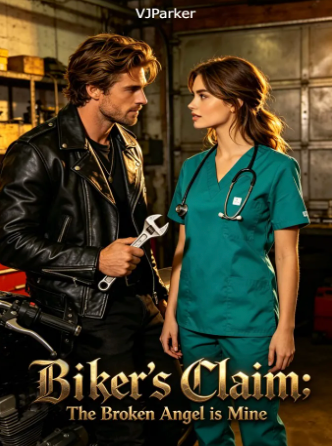
Cora, an ED nurse, found her boyfriend cheating with her best friend and step-brother. Love. Trust. Friendship. All are intangible. All can be broken in an instant and never be repaired once broken. Cora loses all three at once. She feels lost and broken as she flees from the pain and betrayal it has caused. Right into the hands of a strong biker, can he fix what has been broken?
One-Sentence Positioning:
Biker’s Claim: The Broken Angel Is Mine is a raw, high-emotion biker romance about a shattered emergency nurse who loses love, trust, and friendship in one brutal moment, then runs straight into the arms of a man dangerous enough to protect her and complicated enough to become another risk.
Who This Book Is For:
This book is for readers who like their romance bruised, dramatic, and emotionally immediate. If you enjoy small-town betrayal, protective biker heroes, wounded but resilient heroines, found-family energy, and romance that begins not with flirtation but with collapse, Biker’s Claim: The Broken Angel Is Mine will likely speak to you. It is especially suited to readers who want a heroine who is not fragile in the decorative sense, but exhausted from being strong for too long. Cora is an ED nurse, which matters: she is used to crisis, blood, pressure, and survival. So when her own life breaks open, the irony hits harder. She knows how to keep other people alive, but suddenly has no idea how to keep herself from falling apart.
Who This Book Is Not For:
This is not for readers who want a gentle romance, a low-conflict love story, or a hero who expresses devotion through careful emotional vocabulary. The biker-romance promise is built into the title: claim, protection, danger, possession, rescue. If you dislike alpha male energy, trauma-driven romance, betrayal plots, or stories where healing arrives wrapped in leather, engine noise, and control issues, this may feel too heavy-handed. It is also not for readers who want every relationship dynamic to be immediately healthy. This book appears far more interested in the messy question of whether safety can come from someone who is not entirely safe.
3 Reasons to Recommend It:
1. The opening wound is simple, brutal, and effective.
The best digital romance hooks do not need to be complicated; they need to be instantly legible. Here, Cora discovers her boyfriend cheating with her best friend and step-brother. That is not just infidelity. That is a full emotional demolition. Love breaks. Trust breaks. Friendship breaks. Family becomes contaminated. The blurb understands escalation: Cora does not lose one thing; she loses the whole emotional structure that made her life feel recognizable. That gives the romance a strong foundation, because the biker hero is not entering a normal life. He is entering the wreckage.
2. Cora has the right kind of heroine profile for this trope.
A weaker version of this story would make the heroine purely helpless so the biker hero could look powerful by comparison. But Cora being an ED nurse changes the texture. She is not unfamiliar with crisis. She is not naïve about pain. She has likely seen bodies fail, families panic, and strangers break down under fluorescent hospital lights. That background gives her “broken angel” framing more bite. She is not broken because she is weak; she is broken because even competent people have a limit. That is the more interesting version of the rescue fantasy: not a helpless woman waiting to be saved, but a capable woman who finally needs someone to stand between her and the damage.
3. The biker romance setup works because it turns danger into shelter.
Motorcycle club romance has lasted as a subgenre because it offers a fantasy that is morally complicated but emotionally powerful: what if the man everyone else fears becomes the one person who will not let the world hurt you again? Biker’s Claim leans directly into that appeal. The hero’s strength is not presented as polite or polished; it is territorial, physical, and probably a little alarming. But after betrayal, that kind of certainty can feel seductive. Cora has just learned that the people closest to her could lie, cheat, and fracture her life. Against that backdrop, a man who says “mine” may feel less like ownership at first and more like a promise that someone has finally chosen a side.
One Reason Some Readers May Drop It:
The same “claiming” fantasy that makes the book addictive can also become its biggest weakness. There is a fine line between protective and possessive, and biker romance often dances on that line with both boots on the table. If the story allows the male lead’s need to protect Cora to overwhelm her agency, readers may start to feel that one form of betrayal has simply been replaced by another form of control. The book needs to remember that healing is not the same as being claimed. Cora’s recovery has to belong to Cora, not just to the biker who decides she is worth saving.
Editor’s Review:
Biker’s Claim: The Broken Angel Is Mine is built from familiar materials, but familiar does not mean ineffective. Betrayal, a wounded heroine, a strong biker, a small-town atmosphere, the promise of protection — these are not new ingredients. The question is whether the book understands why readers keep returning to them. Based on its premise, it does.
The emotional hook is not just that Cora gets cheated on. It is that the betrayal comes from every direction at once. A boyfriend can be mourned. A friendship can be grieved. A family breach can be processed. But all three at the same time? That is the kind of collapse that does not simply hurt; it disorients. The line between private heartbreak and public humiliation disappears. Cora is not only heartbroken. She has been made foolish by people she trusted. That is often the deeper wound in betrayal romance: not the loss of love, but the realization that you were living inside a lie while everyone else already knew the truth.
This is where the biker hero becomes more than a trope. In a story like this, his appeal is not softness. It is clarity. After emotional betrayal, clarity can feel like oxygen. A biker hero does not typically arrive with nuance; he arrives with rules, boundaries, loyalty, and a blunt understanding of enemies. That is why the pairing works. Cora’s world has become slippery and false. His world, however dangerous, may at least be honest about its danger.
But that is also where the book has to be careful. “Can he fix what has been broken?” is a seductive question, but it is also the wrong question if taken too literally. No man, biker or otherwise, can fix a woman like a damaged motorcycle part. The stronger reading is this: can he create enough safety for Cora to put herself back together? That distinction matters. The best version of this story is not about a broken woman being repaired by a dominant man. It is about a woman who has been emotionally gutted finding the space, rage, and protection necessary to become dangerous on her own behalf.
The “kickass heroine” tag is important here. It suggests the story does not want Cora to remain a trembling victim. That is good, because the betrayed-woman-to-biker’s-woman arc can become stale when the heroine’s pain exists only to activate the hero’s masculinity. Cora’s job, her emotional endurance, and the scale of the betrayal all give the book room to do something sharper: show a woman who has been professionally trained to respond to emergencies finally treating her own life like one. Stop the bleeding. Identify the threat. Stabilize. Then decide who deserves access.
As a Dreame-style romance, this book seems designed for direct emotional payoff rather than literary subtlety. That is not inherently a flaw. Platform romance often succeeds because it removes the dead air. It gives readers a wound, a protector, a conflict, and a reason to keep tapping. Biker’s Claim has those mechanics in place. The danger is not that the premise is too dramatic; drama is the product. The danger is that it could become too automatic if it relies only on betrayal, biker dominance, and wounded-angel imagery without giving Cora a real interior life.
Still, the setup has undeniable pull. A small-town setting makes betrayal feel claustrophobic. An ED nurse heroine adds grit. A biker hero promises danger with a protective target. The emotional equation is clear: Cora loses the people who were supposed to love her gently and finds herself in the hands of someone who may love like a threat. That is not a safe fantasy, but it is a potent one.
Final Verdict:
Biker’s Claim: The Broken Angel Is Mine is a dramatic, emotionally charged biker romance for readers who want betrayal, protection, and a heroine rebuilding herself after a total collapse of trust. Its best quality is the tension between rescue and control: the fantasy of being claimed by someone strong enough to shield you, and the fear that being claimed may become another kind of cage. If the story gives Cora as much power as it gives the biker hero, it could be more than a guilty pleasure. It could be a sharp, addictive survival romance about what happens when a broken angel stops waiting to be fixed and starts deciding who gets to stand beside her.




 千斤顶
千斤顶










 English
 简体中文
简体中文 繁體中文
繁體中文 한국 사람
한국 사람 日本語
日本語 Deutsch
 русский
 بالعربية
 TÜRKÇE
 português
 คนไทย
คนไทย french