One-Sentence Positioning:
Lin Sheng is a politically charged xianxia serial about ordinary people trapped inside a collapsing order, where loyalty can become treason overnight, moral clarity is a luxury, and the road toward sanctity begins not with transcendence but with hunger, paperwork, murder, and survival.
Who This Book Is For:
This book is for readers who like xianxia with brains, institutions, and social pressure rather than pure flying-sword escapism. It will especially appeal to fans of court intrigue, investigative plotting, morally tangled officials, scholar-cultivator tension, underclass survival, academy arcs, political conspiracy, and protagonists who rise by reading the room as carefully as they read a cultivation manual. Readers who enjoyed the author’s earlier gift for blending mystery, bureaucracy, humor, and large-scale power structures will probably find the opening familiar in the right way: controlled, layered, and more interested in how a world works than in simply throwing a protagonist a cheat code.
Who This Book Is Not For:
This is not for readers who want instant invincibility, nonstop battles, clean revenge fantasy, or an early flood of realm names and power rankings. If your preferred xianxia is all breakthrough, treasure, face-slapping, sect war, and divine bloodline escalation from chapter one, Lin Sheng may feel too deliberate. It starts by building pressure: identity, danger, social hierarchy, political rot, local survival, and the question of who is using whom. That makes it richer, but also less immediately explosive.
3 Reasons to Recommend It:
1. It treats xianxia power as political, not merely spiritual.
The best thing about Lin Sheng’s premise is that it does not frame cultivation as an isolated personal ladder. Power here appears embedded in law, office, ritual, education, social class, and state violence. The synopsis alone announces a world where “loyalty” and “rebellion” are not stable moral categories but labels written by whoever holds the brush. That is a much sharper starting point than the usual “young man discovers talent and climbs realms” structure. The story’s real question is not just whether Yan Shixu can become stronger, but whether strength means anything in a world where the board, the rules, and even the definition of righteousness may already be controlled by someone else.
2. The opening has a strong sense of civic decay.
The most striking line in the public synopsis is not about gods, immortals, or secret techniques. It is about officials talking endlessly of the state while no one listens to the people. That line gives the serial its moral temperature. Lin Sheng appears to be building a xianxia world where metaphysical ambition and social collapse are inseparable. Court music continues while half the realm rots. Noble titles are awarded while people starve. Great men debate destiny while ordinary lives are spent as currency. That civic bitterness gives the story weight. It suggests that the protagonist’s rise will not simply be personal advancement, but a confrontation with a diseased order.
3. Maibao Xiaolangjun’s strengths fit this material.
The author’s reputation matters here, not as a free pass, but as context. His best-known work succeeded because it understood that genre pleasure can coexist with structure: mystery, comedy, character voice, bureaucracy, and long-game plotting. Lin Sheng’s early chapter titles suggest similar instincts — a disastrous opening, identity substitution, hidden mechanisms, murder, pursuit, examination, academy entry, philosophical questioning. This is not random escalation; it looks like a staged widening of the world. First survival, then identity, then institution, then ideology. That kind of progression is promising because it gives the serial room to become more than a power fantasy.
1 Major Drawback:
The biggest caution is that the book is still young and carrying a very heavy reputation. Because it is a new work by a major webnovel author, readers are not approaching it neutrally; they are comparing every chapter to earlier hits, waiting for the old magic, and scrutinizing every hint of theme or direction. At this stage, Lin Sheng has atmosphere, control, and ambition, but its long-term ceiling is not yet proven. The early chapters can suggest greatness, but a political xianxia of this kind only truly succeeds if its conspiracies, power system, character relationships, and moral stakes keep compounding over hundreds of chapters. Right now, the foundation is strong; the cathedral is still under construction.
Editor’s Review:
Lin Sheng arrives with the burden and advantage of expectation. A lesser-known author could publish this opening and be judged simply on intrigue, pacing, and style. Maibao Xiaolangjun cannot. Every chapter arrives under the shadow of his previous successes, especially his reputation for making xianxia feel worldly rather than weightless. That context is impossible to ignore, but it also clarifies what Lin Sheng seems to be attempting: not a retreat into familiar immortal fantasy, but a return to the author’s preferred battlefield — systems, secrets, institutions, and ordinary people trying to survive the games of the powerful.
What immediately separates Lin Sheng from more generic cultivation fiction is its language of governance. The synopsis is practically a political poem. Who is playing the game? Who is trapped inside it? Who writes loyalty? Who becomes a traitor when the ink dries? Who talks about the nation while ignoring the people? These are not decorative questions. They indicate a world where moral categories have been seized by power. In that sense, the book’s xianxia framework may be less about escaping the mortal world than exposing how the mortal world manufactures saints, criminals, rebels, and martyrs.
Yan Shixu, based on the early public material, seems positioned as the kind of protagonist who must first understand the board before he can move across it. That matters. Many webnovel heroes begin with a private humiliation and turn it into personal revenge. Lin Sheng appears more interested in structural humiliation: poverty, institutional suspicion, social invisibility, political manipulation, and the terrifying ease with which a person can be written into someone else’s crime. The chapter title “Li Dai Tao Jiang” — substitution, replacement, one person standing in for another — is almost too perfect as an early thematic signal. Identity in this world is not sacred. It can be assigned, stolen, forged, or weaponized.
The novel’s early trajectory also suggests a controlled expansion. It begins with catastrophe, then moves into family, contact, secrets, murder, pursuit, examination, academy, debate, poetry, and the threshold of “human realm.” That sequence has the feel of a writer arranging not only plot beats but social layers. Street danger leads to institutional danger. Personal survival leads to ideological conflict. A secret technique or artifact is not merely a tool for combat; it becomes a way of asking what kind of world would require such tools in the first place.
This is where Lin Sheng’s most interesting promise lies. It may become a story about cultivation, but the more compelling possibility is that it becomes a story about legitimacy. Who gets to be called righteous? Who gets to be called rebellious? Who has the authority to name a massacre as policy, a theft as taxation, a betrayal as loyalty? In Western critical terms, Lin Sheng is less “chosen one ascends” and more “the archive is rigged, and the protagonist must learn how history gets written before he can change it.”
That does not mean the book is above genre pleasure. It still seems to understand the appeal of mystery hooks, hidden objects, school entry, chase sequences, dangerous meetings, and the slow reveal of a larger cosmology. The difference is that these pleasures are being folded into a darker civic imagination. The academy is not just a training ground. The court is not just a backdrop. The old scholar, the judge, the officials, the classmates, the mysterious female figures — all of them potentially represent competing versions of order.
The critique, for now, is uncertainty. Lin Sheng’s early reception appears hopeful but cautious: readers recognize the polish, but many also note that the chapter count is still too small to judge the full direction. That is a fair response. Political xianxia can fail in two opposite ways. It can become too dense, burying momentum under explanation. Or it can set up grand social critique only to collapse back into ordinary power escalation. The book’s challenge will be to keep its moral intelligence alive once the protagonist grows stronger. If the world’s rot is only there to make the hero look better, the story will shrink. If the hero’s growth forces the world’s contradictions into sharper and more dangerous forms, Lin Sheng could become something far more memorable.
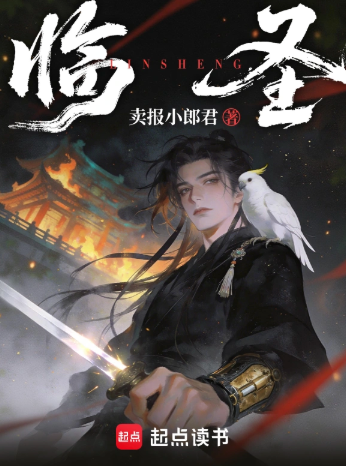
There is also a fascinating tension in the title. “Lin Sheng” can suggest approaching the sacred, nearing sagehood, standing at the threshold of sanctity. But the book’s public-facing imagery is not clean or heavenly. It is full of hunger, decay, treason, rulers, officials, and unheard commoners. That contrast is the hook. Perhaps sainthood here is not purity. Perhaps it is the ability to remain morally awake in a world designed to make everyone complicit. Or perhaps the title is more ironic: to approach the saint is to discover how many bodies are buried under the altar.
Final Verdict:
Lin Sheng is an early but highly promising xianxia serial with a sharper political nerve than the average cultivation launch. It is not yet a proven masterpiece, and readers expecting immediate fireworks may find the opening too measured. But its atmosphere, civic anger, institutional intrigue, and controlled expansion suggest a novel aiming for more than realm-climbing spectacle. At its best, it reads like xianxia filtered through court conspiracy and social collapse: a story where the first step toward transcendence is not escaping the world, but understanding exactly who made it unbearable.
|




 千斤顶
千斤顶











 English
 简体中文
简体中文 繁體中文
繁體中文 한국 사람
한국 사람 日本語
日本語 Deutsch
 русский
 بالعربية
 TÜRKÇE
 português
 คนไทย
คนไทย french