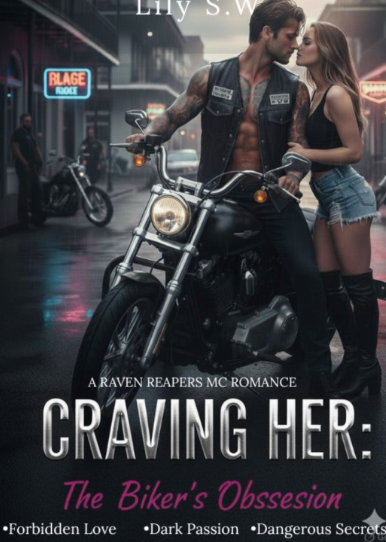
Leather. Oil. Whiskey. That was the life Wren thought she left behind until one tragedy drags her back. —————— “Put me down, Ezra!” I manage to huff out. A loud smack cracks on my bum, pain shooting up. “Shut it, Wren.” My jaw drops, heat flaming across my skin at the realization of what just happened. “D-did you just sp-spank me?” I gasp in disbelief, core tingling. Another smack—harder and louder than the last— follows my words. “I said, shut it.” >>>> Wren is forced back into the club life, the world of men who live and die by their kuttes. Men who live by loyalty. When her brother entrusts her under the protection of the one man who she despises—or so she thinks—she doesn’t expect the roller coaster of emotions that come with him. Ezra Jax, vice president of the Raven Reapers MC. Infuriating, tempting and her brother’s best friend. The one man she shouldn’t want, the one man she should stay away from. In between debts, gang wars and betrayals, buried feelings rise. The more she tries to stay away, the deeper his pull. And the more he pushes her away, the harder he falls. In a world where loyalty is valued, and love is bound to break them both, will Wren risk her heart on the one man she should never have gotten close to? And would Ezra choose Wren over his loyalty?
One-Sentence Positioning:
Craving Her: The Biker’s Obsession is a gritty, high-heat motorcycle-club romance about a woman dragged back into the world she tried to escape, and the dangerous man whose protection feels almost as threatening as the enemies outside the clubhouse.
Who This Book Is For:
This book is for readers who like their romance loud, possessive, physical, and morally smoky — the kind of story where desire arrives with leather, whiskey, blood debts, brotherhood codes, forbidden tension, and a hero who treats protection like a claim. It will especially appeal to fans of MC romance, brother’s-best-friend forbidden love, forced proximity, enemies-to-lovers banter, alpha male obsession, club politics, and heroines who push back instead of simply melting.
Who This Book Is Not For:
This is not for readers who want soft courtship, clean romance, subtle emotional realism, or a gentle hero who asks permission before taking up narrative space. If you dislike possessive male leads, dominance-coded intimacy, biker-club violence, rough banter, jealousy, power imbalance, or heroines being pulled into dangerous male-dominated worlds, this book may feel more abrasive than seductive.
3 Reasons to Recommend It:
1. The MC setting is not just decoration — it gives the romance its moral pressure.
A lot of biker romances use the motorcycle-club world as aesthetic shorthand: leather, tattoos, danger, and men with gravel in their voices. Craving Her: The Biker’s Obsession goes further by making loyalty the emotional trap at the center of the story. Ezra is not simply a bad boy with a bike; he is a vice president inside a brotherhood where protection, violence, hierarchy, and obedience matter. That means loving Wren is not just a private desire. It becomes a question of allegiance. Is he loyal to the club, to her brother, to the codes that shaped him, or to the woman he cannot stop wanting? That tension gives the romance a sharper edge than a simple “dangerous man falls for good girl” setup.
2. Wren and Ezra’s dynamic has the volatile pleasure of people who fight because they feel too much.
The strongest hook is the push-pull between Wren and Ezra. She is not written as a passive innocent dropped into a violent world just to be rescued. She has history with this life, resentment toward it, and enough bite to make Ezra’s authority feel challenged rather than automatically accepted. Their chemistry comes from friction: irritation, attraction, old familiarity, forbidden proximity, and the knowledge that wanting each other could cause real damage. The appeal is not that they are healthy from page one. The appeal is that every exchange feels like a match struck too close to gasoline.
3. It delivers the addictive, high-stakes melodrama readers expect from serialized romance.
The book understands the rhythm of web fiction: short emotional hooks, escalating danger, immediate tension, and chapters built to keep readers moving. Betrayal, debts, gang wars, club politics, buried feelings, and forbidden desire are not treated as background noise; they are the machinery of the story. For readers who enjoy bingeable romance, that is a strength. The novel is not trying to be minimalist or literary in the quiet sense. It is built for appetite — for the reader who wants to feel the heat, the threat, the jealousy, the danger, and the inevitable collapse of self-control.
1 Major Drawback:
The same intensity that makes the book addictive can also make it polarizing. The possessive biker-romance framework leaves little room for softness, and some scenes lean into dominance, physicality, and alpha behavior in ways that will thrill trope readers but alienate anyone looking for balanced emotional negotiation. Ezra’s appeal depends on the reader accepting the genre’s fantasy of dangerous protection; without that buy-in, his behavior can read less romantic and more controlling. This is a book that knows its lane, but that lane is not for everyone.
Editor’s Review:
Craving Her: The Biker’s Obsession is the kind of romance that walks in smelling of oil, leather, and bad decisions. It does not court the reader politely. It grabs the genre by its most unapologetic tropes — the biker vice president, the off-limits woman, the brother’s-best-friend rule, the clubhouse, the violence, the possessive attraction — and asks whether desire can survive inside a world where loyalty is both sacred and suffocating.
The central relationship works because Wren is not simply impressed by Ezra’s danger. She is irritated by it, wounded by it, tempted by it, and smart enough to know that the very qualities that make him magnetic also make him unsafe. That is the core contradiction of the book. Ezra represents protection, but also possession. He can shield her from the outside world, but he also belongs to a system that operates through control, secrecy, and masculine codes. The romance is therefore less about whether he wants her — he clearly does — and more about whether wanting her will force him to betray the version of himself the club requires.
Wren is the necessary counterweight. In a weaker version of this story, she would exist only as the fragile woman protected by dangerous men. Here, her anger gives the romance its pulse. She pushes, snaps, resists, and refuses to treat the clubhouse as some erotic fantasyland. She knows enough about that world to understand its cost. That makes her attraction to Ezra more interesting, because it is not naïve. She is not falling for the leather jacket because she has never seen what violence does. She is falling despite knowing exactly what that world can take.
Ezra, meanwhile, is pure MC-romance catnip: possessive, blunt, emotionally repressed, physically commanding, and caught between desire and code. He is not designed to be a universally acceptable romantic hero. He is designed to be a genre-specific fantasy of dangerous devotion — the man who may not know how to speak gently, but knows how to stand between the heroine and every threat in the room. The book’s gamble is that readers will find that intoxicating rather than alarming. For the target audience, they probably will.
What gives the story its bite is the brother’s-best-friend prohibition. It turns the romance into more than attraction. Wren is not just a woman Ezra wants; she is someone he is not supposed to touch, someone whose protection has been entrusted to him, someone connected to the very loyalty system he lives by. That makes every step toward her feel like a betrayal before it becomes a confession. In romance terms, that is excellent fuel. In emotional terms, it creates the question the whole book circles: when love and loyalty point in opposite directions, which one reveals the real man?
The book is not subtle. It is not trying to be. Its language, setup, and emotional temperature belong firmly to the world of serialized dark-leaning romance, where restraint often loses to escalation and quiet longing gets traded for confrontation, danger, and heat. That can make the prose feel heavy-handed in places, especially for readers who prefer psychological nuance over trope intensity. But it would be a mistake to judge it by the standards of a restrained literary romance. Its power lies in the pressure cooker: the club, the threats, the forbidden attraction, the sense that every private feeling has public consequences.
The sharpest critique is that Craving Her: The Biker’s Obsession occasionally risks confusing possession with intimacy. That is not unusual for the subgenre, but it is worth naming. The fantasy of being wanted with brutal certainty can be thrilling on the page, yet the emotional depth depends on whether the story allows Wren’s autonomy to matter as much as Ezra’s hunger. When the book gives her defiance real weight, the romance sparks. When the dominance fantasy takes over too completely, the balance becomes more fragile.
Still, as a biker romance, it knows what its readers came for. It offers heat, danger, brotherhood, forbidden longing, and the classic pleasure of a man who thinks he can control everything until one woman becomes the exception. It is messy, dramatic, possessive, and shamelessly addictive in the way web romance often is. The book’s best quality is not refinement. It is velocity. It keeps moving, keeps burning, and keeps asking the reader to choose between common sense and craving.
Final Verdict:
A dark-leaning, trope-rich MC romance that delivers exactly what its title promises: obsession, danger, forbidden heat, and a biker hero whose loyalty is tested by the one woman he should not want. Not for readers seeking softness or subtlety, but highly readable for fans of possessive, high-stakes, brother’s-best-friend biker romance.




 千斤顶
千斤顶










 English
 简体中文
简体中文 繁體中文
繁體中文 한국 사람
한국 사람 日本語
日本語 Deutsch
 русский
 بالعربية
 TÜRKÇE
 português
 คนไทย
คนไทย french