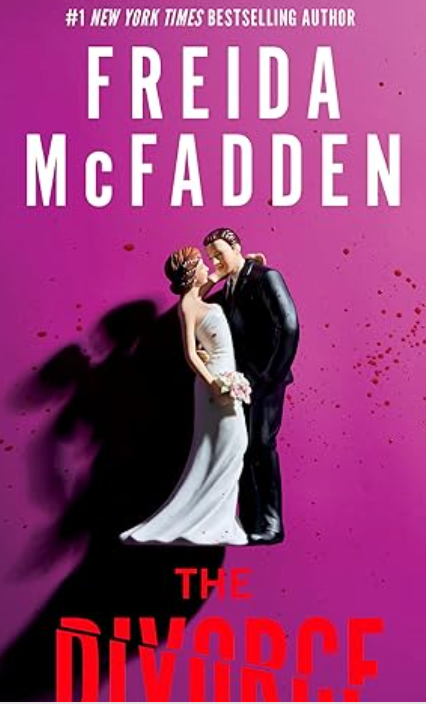
What is a happily ever after really worth? Naomi was living the quintessential love story. Boy meets girl. They fall in love, get married, buy a dream house, start a family... Then—he kicks her out, hires the city’s best divorce lawyers, drains their accounts, and takes up with a 20-something. It’s a brutal end to the story. Naomi should accept defeat: move into a dingy apartment, get back into the workforce, and piece together the shattered remains of her life. Except, why should she?
One-Sentence Positioning:
The Divorce is Freida McFadden turning a failed marriage into a pressure cooker: part revenge fantasy, part domestic nightmare, and part reminder that the most dangerous person in a thriller is often the woman everyone expects to “move on.”
Who This Book Is For:
This is for readers who want a fast, compulsive psychological thriller built on betrayal, humiliation, marital collapse, and the deliciously toxic question of how far a wronged wife should go before revenge stops looking like justice. If you like short chapters, sharp hooks, messy female obsession, wealthy divorce warfare, paranoid domestic suspense, and a story engineered to be inhaled rather than politely admired, The Divorce is squarely in your lane. It is especially suited to readers who enjoy Freida McFadden’s signature style: clean prose, high momentum, big reveals, and the kind of final twist that makes you immediately replay earlier scenes in your head.
Who This Book Is Not For:
This is not for readers looking for literary subtlety, slow psychological excavation, courtroom realism, or a morally tidy portrait of divorce. It is also not the best entry point for someone who dislikes twist-first thrillers, because McFadden’s method is not to linger in ambiguity for 500 pages; it is to build a clean runway, accelerate hard, and then yank the floor out from under the reader. If you want quiet realism about the emotional aftermath of separation, this may feel too heightened. If you want the thriller equivalent of “just one more chapter,” it understands the assignment almost too well.
Three Reasons to Recommend It:
1. It turns divorce into a survival thriller, not just a relationship drama.
The smartest thing The Divorce does is refuse to treat the end of Naomi’s marriage as a sad domestic inconvenience. Her husband does not simply leave; he removes money, shelter, legal leverage, emotional security, and social dignity in one brutal sweep. That changes the emotional weather of the book. This is not a woman crying over a man who moved on. This is a woman being strategically erased from the life she helped build. McFadden understands that domestic thrillers work best when the home stops being safe, and here the “dream house” becomes evidence of a rigged system. The marriage was supposed to be Naomi’s happily ever after. The divorce turns it into a crime scene.
2. Naomi’s obsession is uncomfortable in the right way.
A lesser version of this story would make Naomi purely sympathetic: betrayed wife, awful husband, younger girlfriend, righteous revenge. McFadden gives readers that surface pleasure, but the engine is darker. Naomi’s fixation on the new woman is not presented as dignified empowerment. It is needy, jealous, frightening, and deeply human. That is where the book gets its sting. Being replaced is not just heartbreak; it is an identity wound. Naomi is not only asking, “Why did he choose her?” She is asking, “What part of my life was ever real?” Her obsession is ugly because humiliation is ugly. That makes her more interesting than a clean “good for her” heroine.
3. It is built for maximum readability without pretending to be something else.
Freida McFadden’s gift is not ornate prose or meditative ambiguity. Her gift is narrative velocity. The Divorce has the shape of a book designed by someone who understands exactly how modern thriller readers consume suspense: short bursts, quick reversals, clean emotional stakes, and revelations placed where the reader is most likely to say, “Fine, one more chapter.” That can sound dismissive, but it should not be. Readability is a craft. McFadden writes with the confidence of an author who knows that a domestic thriller does not need to be slow to be sharp. It needs pressure, escalation, and the constant suspicion that everyone is lying about the wrong thing.
One Reason Some Readers May Drop It:
The same speed that makes The Divorce addictive may also make it feel thin to readers who want deeper character psychology. McFadden’s thrillers often operate like expertly packaged page-turners: the premise is clean, the stakes are immediate, the twist machinery is visible but effective. For fans, that is the appeal. For skeptics, it can feel like the book is more interested in the next reveal than in fully sitting with the emotional wreckage. If you prefer slow-burn domestic noir where every motive is painfully unpacked, The Divorce may feel too efficient for its own darkness.
Editor’s Verdict:
The Divorce is not subtle, and it does not need to be. It is a polished revenge-thriller machine built out of marital betrayal, class panic, female rage, and the ancient horror of being replaced by someone younger while the world expects you to behave gracefully about it.
What makes the premise work is the brutality of Naomi’s fall. McFadden does not start with a vague unhappy marriage. She starts with dispossession. Naomi loses the story she believed she was living: the romance, the house, the family, the shared future, the financial ground under her feet. Her husband’s betrayal is not just sexual or emotional; it is logistical. He has lawyers. He has money. He has the new girlfriend. He has the ability to rewrite the breakup as if Naomi is simply a problem to be removed. That is why the book’s revenge current feels so potent. Naomi’s rage is not random. It is the sound of a woman realizing that “happily ever after” was partly a legal and financial arrangement she no longer controls.
The novel’s most interesting tension is that Naomi is both victim and threat. McFadden understands the appeal of a wronged-wife narrative, but she also understands that obsession curdles quickly. The new girlfriend becomes a screen onto which Naomi projects youth, theft, humiliation, and every private fear about becoming disposable. That is uncomfortable because it is emotionally plausible. The book asks readers to root for Naomi while also watching her become capable of things that make rooting for her harder. That moral slipperiness is where the novel earns its thriller label.
Of course, this is still Freida McFadden territory. The prose is direct. The chapters are engineered for speed. The twists are meant to hit like trapdoors, not like quiet literary revelations. Readers who already love McFadden will likely find exactly what they came for: a premise you can explain in one sentence, a heroine under pressure, a domestic setup that grows more sinister by the page, and a final stretch built to be devoured. Readers who dislike her formula will probably find their objections confirmed: the book favors momentum over nuance, reversals over realism, and compulsive plotting over psychological sprawl.
But dismissing The Divorce as “just another twisty thriller” misses why the premise has such commercial force. Divorce is already a horror story when love becomes litigation. McFadden simply turns up the genre lighting. The monster is not a stranger in the woods. It is the person who knows your bank account, your routines, your weaknesses, your children, your house, your shame. The courtroom may be offstage, but the battle is everywhere.
The result is a thriller that works best when read as emotional revenge pulp: not realistic enough to be a case study, not delicate enough to be literary fiction, but sharp enough to hit the raw nerve it is aiming for. The Divorce understands that being abandoned is painful, but being replaced is radioactive. Naomi’s spiral is the book’s hook, its danger, and its guilty pleasure. You may not approve of her. You may not trust her. But McFadden knows exactly how to make you keep turning the pages to see what she does next.




 千斤顶
千斤顶









 English
 简体中文
简体中文 繁體中文
繁體中文 한국 사람
한국 사람 日本語
日本語 Deutsch
 русский
 بالعربية
 TÜRKÇE
 português
 คนไทย
คนไทย french