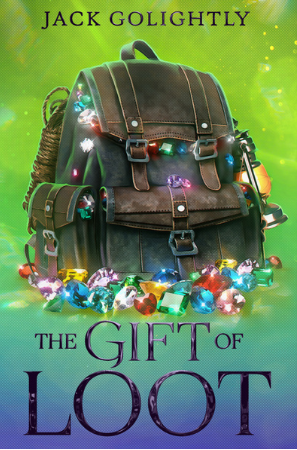
He who has the most loot, wins. Thomas just wants to keep his skin intact during the System integration, and maybe carve out a life that's more interesting than the one he's had so far. When he steps inside a dungeon, he receives his magical gift: Every monster kill drops weapons, mana crystals, and powerful gear. While others struggle to survive in a new world, Thomas begins to build something far more dangerous: An advantage.
The Gift of Loot is a cleanly engineered LitRPG apocalypse about a cautious, rational survivor whose greatest weapon is not raw power, prophecy, or chosen-one melodrama, but the terrifying economic advantage of getting better loot than everyone else.
Who This Book Is For
This book is for readers who love system apocalypse fiction but are tired of protagonists who treat the end of the world like an excuse to sprint shirtless into danger. If you enjoy dungeon-clearing, item drops, measured progression, practical decision-making, and a main character who thinks before he swings, The Gift of Loot hits a very specific sweet spot.
It is especially suited for Royal Road readers who like their LitRPG crunchy but readable, strategic but not spreadsheet-dead, and optimistic without becoming naïve. The appeal is not that Thomas is the strongest man in the room. The appeal is that he is building a lead while everyone else is still trying to understand the rules. This is apocalypse as logistics, loot economy, risk management, and controlled escalation.
It will also work for readers who enjoy the dopamine of gear acquisition but want the gear to matter. The title promises loot, and the story understands that loot is only satisfying when it changes behavior, options, and social leverage. A weapon drop is not just a shiny object here. It is a future decision. A mana crystal is not just treasure. It is market pressure. A good build is not only about fighting; it is about becoming impossible to ignore.
Who This Book Is Not For
This is not for readers who want grimdark misery, constant mass death, instant world-spanning stakes, or a protagonist who wins by emotional explosion rather than preparation. The Gift of Loot is not trying to be the loudest apocalypse in the genre. Its flavor is quieter, more procedural, more “let me test the system before I gamble my life on it.”
Readers who need heavy interpersonal drama from page one may also find the early experience too focused on mechanics, dungeon process, and personal optimization. The book’s confidence lies in competence, not chaos. That is refreshing if you like rational progression; it may feel too controlled if you prefer your apocalypses messy, desperate, and socially combustible from the first chapter.
Three Reasons to Recommend It
It makes loot feel like strategy rather than decoration.
A lot of LitRPG stories say they are about loot, but what they really mean is that the protagonist gets a new sword every few chapters and the number goes up. The Gift of Loot is more interesting because it treats loot as infrastructure. Thomas’s gift does not simply make him stronger; it changes the kind of game he is playing. He is not just surviving encounters. He is generating surplus in a collapsing world.
That distinction gives the story its edge. A normal apocalypse protagonist is trapped in scarcity. Thomas is creating inventory. While everyone else is reacting to the system, he is beginning to exploit its supply chain. That makes his power feel less like a cheat code and more like an emerging business model with blood on the floor.
This is where the book’s premise becomes sharper than it first looks. “He who has the most loot, wins” sounds like a gamer joke, but underneath it is a thesis about power. In a system apocalypse, wealth is no longer money. It is gear, information, upgrade paths, mana, crafting inputs, access, and survivability. Thomas’s advantage is not merely that he gets more stuff. It is that he gets to make decisions other people cannot afford to make.
Thomas is rational without becoming insufferable.
The “rational protagonist” label can be a warning sign. Too often it means the main character is less a person than a smug decision tree wearing a hoodie. The Gift of Loot mostly avoids that trap. Thomas thinks, tests, adapts, and plans, but he does not feel like he was assembled in a forum argument about optimal behavior. His caution gives him texture. His practicality feels like survival instinct rather than authorial superiority.
That matters because the story’s pacing depends on the reader believing in his choices. When Thomas takes a measured approach to dungeons, the book is not stalling; it is defining him. He is not brave because he ignores danger. He is brave because he respects it enough to prepare.
This gives the early chapters a grounded pleasure. The System may be magical, but Thomas’s response to it is recognizably human: figure out the rules, preserve your skin, identify leverage, build a margin of safety, then push. In a genre crowded with protagonists who immediately act like they have read the author’s outline, Thomas’s caution feels almost rebellious.
The tone understands that “not grimdark” does not mean “low stakes.”
One of the smartest positioning choices here is that The Gift of Loot is apocalypse fiction without wallowing in despair. The world is changing, danger is real, and the System is not a theme park, but the story does not mistake bleakness for maturity. It lets the reader enjoy discovery. It remembers that LitRPG is partly about wonder: new rules, new gear, new thresholds, new ways reality can be hacked.
That tonal balance is important. If the book were too cheerful, the apocalypse would feel fake. If it were too brutal, the loot fantasy would curdle into survival horror. Instead, it lands in a zone where tension and fun can coexist. You can worry about what the System integration means while still enjoying the obscene satisfaction of a good drop.
The result is a story that feels accessible without being thin. Its early appeal is not grand tragedy; it is momentum. Thomas clears, learns, upgrades, sells, tests, and improves. The chapters create that very Royal Road-specific compulsion: not “what will happen in the abstract,” but “what new option will this unlock?”
One Reason Some Readers May Bounce Off
The main risk is that the loot premise can narrow the emotional bandwidth if the story leans too hard on optimization before deepening the cast and larger conflict. The mechanics are fun, but loot alone cannot carry a long-running serial forever. Eventually, the question has to evolve from “what did he get?” to “what does having it cost?”
The book is strongest when the loot creates social, tactical, or moral consequences. It is less interesting when the reward loop threatens to become self-contained. A great drop is exciting once. A great drop that changes relationships, attracts predators, distorts markets, or forces Thomas into uglier choices is what will make the story last.
That is the critical hinge for The Gift of Loot. Its early chapters show polish, control, and genre fluency. The long-term test will be whether the story turns its excellent premise into pressure, not just profit.
Editor’s Review
The Gift of Loot arrives with one of those titles that looks almost too blunt to be clever, then quietly proves it knows exactly what it is doing. It is a LitRPG apocalypse built around a simple advantage: Thomas kills monsters, and the world pays him better than it pays everyone else. But the book’s appeal is not just the fantasy of abundance. It is the fantasy of competence under pressure.
In a genre obsessed with power, The Gift of Loot is more interested in advantage. That is a meaningful difference. Power wins fights. Advantage compounds. Power is a fireball. Advantage is having the right fireball, the right armor, the right mana crystal, the right buyer, the right information, and the good sense not to walk into a dungeon like an idiot.
Thomas works because he is not written as a messiah. He is written as a man who recognizes that the new world is a ruleset, and rulesets reward the people willing to study them. His gift could easily have turned him into an instant overpowered protagonist, but the story’s better instinct is to focus on process. What do drops mean? How do they alter risk? How do they create opportunity? What does a survivor do when the apocalypse gives him not just a weapon, but a business advantage?
That angle gives the novel its best texture. The Gift of Loot is not merely about killing monsters for prizes. It is about the birth of a new economy. The System integration does not just threaten civilization; it reprices everything. Skill, courage, gear, mana, knowledge, and access all become currencies. Thomas’s gift puts him near the mint.
The prose, at least from the public-facing reception and premise, appears to be one of the story’s selling points: readable, smooth, and confident enough not to bury the central hook under fake complexity. That is crucial for this kind of serial. LitRPG lives or dies by clarity. Readers need to understand the mechanic, feel the reward, and believe the protagonist’s choices have consequence. The Gift of Loot seems to understand that readability is not a lesser virtue. In web serial fiction, it is survival gear.
What is most promising is the story’s restraint. It does not appear to be chasing darkness for prestige or absurd scale for cheap awe. The apocalypse is present, but the book’s pulse is practical. Thomas wants to survive, improve, and carve out a life more interesting than the one he had before. That ambition is modest on paper and extremely durable in execution. A protagonist does not need to begin by saving the universe. Sometimes he only needs to build enough of an advantage that the universe starts paying attention.
The critique is that the premise will eventually demand escalation beyond the pleasure of drops. Loot is an excellent hook, but hooks are not architecture. The story will need stronger external pressures, richer relationships, and a clearer long-game threat if it wants to become more than a very enjoyable progression loop. The danger is not bad writing; the danger is comfort. A loot-based story can become so satisfying moment to moment that it forgets to wound its protagonist in ways gear cannot fix.
But that is also why The Gift of Loot is worth watching. Its foundation is strong because it understands the genre from the inside. It knows the thrill of the drop, the pleasure of preparation, the appeal of a rational main character, and the strange comedy of trying to behave sensibly while reality is being patched by a hostile game engine.
For readers who want a polished, strategic, loot-forward LitRPG apocalypse with a protagonist who treats survival like a problem to be solved rather than a stage for ego, The Gift of Loot is one of those Royal Road stories that feels built to climb. It may not reinvent the system apocalypse, but it sharpens one of the genre’s most addictive promises: in the end, the winner may not be the strongest. It may simply be the person who understood the value of the drop before everyone else did.




 千斤顶
千斤顶








 English
 简体中文
简体中文 繁體中文
繁體中文 한국 사람
한국 사람 日本語
日本語 Deutsch
 русский
 بالعربية
 TÜRKÇE
 português
 คนไทย
คนไทย french