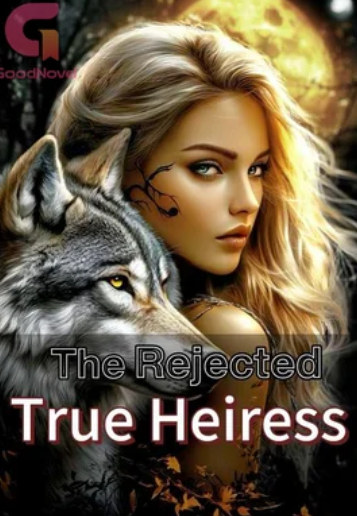
She is the only female Alpha in the world, the princess of the Royal Pack. To protect her, her father insisted on homeschooling her. She longed to go to school, but her father demanded she hide her Alpha powers. So, she pretended to be a wolfless— Until she met her destined mate. But he turned out to be the heir of the largest pack, and he rejected her?! “A worthless thing with no wolf, how dare she be my mate?” — He publicly rejected her and chose another fake. Until the homecoming... Her Royal Alpha King father appeared: “Who made my daughter cry?” The once proud heir knelt before her, his voice trembling: “I’m sorry… please come back.” She chuckled and raised her gaze: “Now you know to kneel?”
The Rejected True Heiress is a high-drama werewolf revenge romance about a royal girl pretending to be powerless, a fated mate too arrogant to recognize her worth, and the deliciously cruel social collapse that follows when the “nobody” turns out to be the most dangerous woman in the room.
Who This Book Is For
This book is for readers who want their paranormal romance loud, emotional, humiliating, vindictive, and shamelessly addictive. If your favorite kind of heroine is the girl everyone mocks at the beginning and fears by the middle, The Rejected True Heiress knows exactly which nerve to press. It is built for readers who love hidden-identity plots, fake heiress chaos, mate-bond angst, public rejection scenes, school hierarchy drama, royal pack politics, and the slow, painful satisfaction of watching the wrong people realize they backed the wrong queen.
It is also for readers who enjoy a heroine whose power is not simply physical. Liora’s real hook is not that she is secretly royal, or secretly an Alpha, or secretly more important than the social climbers around her. The hook is that she chooses anonymity and then discovers how ugly the world becomes when it believes she has no value. That gives the book its strongest sting: the fantasy is not just “she was powerful all along.” It is “you revealed your character when you thought she was powerless.”
Who This Book Is Not For
This is not for readers who want quiet subtlety, grounded pacing, or a romance where the male lead’s mistake is small enough to forgive over coffee. The rejection here is not a cute misunderstanding; it is public, classist, status-obsessed, and deliberately humiliating. Readers who dislike drawn-out identity concealment, fake-girl rivalry, repeated emotional punishment, or heroes who need several disasters before developing basic moral eyesight may find the experience frustrating rather than thrilling.
It is also not for anyone who needs the heroine to make the most efficient possible decision at every turn. The book runs on delay, secrecy, pride, social theater, and the kind of melodramatic withholding that can make readers scream at the page. That is part of the appeal, but it is also the tax you pay to live inside this genre.
Three Reasons to Recommend It
The hidden-identity premise has a sharper social bite than it first appears to.
On the surface, The Rejected True Heiress looks like a familiar wish-fulfillment setup: a powerful girl hides her identity, everyone mistreats her, and eventually the truth detonates. But the reason the trope still works here is that the humiliation is not random. The story is obsessed with status perception. Liora is not hated because of who she is; she is hated because of who people think she is. That distinction matters.
By stripping away her aura, title, scent, and royal visibility, the story places her inside a brutal social experiment. What happens when a princess becomes unreadable to a world addicted to hierarchy? What happens when people cannot smell power, cannot see rank, cannot benefit from politeness? The answer is ugly, and that ugliness gives the book its addictive charge. The novel is not subtle about class cruelty, but it is effective. It understands that revenge fantasy works best when the insult is not merely personal, but systemic.
Liora is compelling because she is both overpowered and emotionally exposed.
A weaker version of this story would make Liora invincible from the first chapter and flatten the tension immediately. The more interesting choice is that she has immense hidden power but still wants something painfully ordinary: freedom, school, recognition, a mate who chooses her without needing a crown as evidence. That contradiction gives her character more texture than the typical “secret boss girl” archetype.
She can defeat powerful figures, but she still wants to be loved without the protection of her title. She can inherit authority, but she still wants to know what people see when the throne is removed. That is the emotional trap of the book. Liora’s disguise gives her freedom, but it also exposes her to the truth. And the truth is that many people around her are loyal not to goodness, not to instinct, not even to love, but to spectacle.
That is why her rejection lands. It is not only romantic betrayal. It is proof that the bond she hoped might be sacred is still vulnerable to prejudice, vanity, and ambition.
The book understands the guilty pleasure of delayed recognition.
The Rejected True Heiress is not trying to be a minimalist literary character study. It is a serialized emotional machine, and its engine is delayed recognition. The pleasure comes from the reader knowing what the characters do not: that every insult is being aimed at the wrong target, every act of condescension is digging a deeper grave, and every smug social climber is standing on a trapdoor.
This is the kind of story that thrives on reader anticipation. You keep turning pages not because the moral universe is complex in a quiet way, but because you want the moment of exposure. You want the father to arrive. You want the fake to crack. You want the arrogant mate to understand what he threw away. You want the school hierarchy to reverse so violently that everyone who laughed has to swallow their own performance.
That emotional design is very effective. The book knows that revenge is most satisfying when it is not immediate. It lets the wound breathe before it lets the crown drop.
One Reason Some Readers May Bounce Off
The biggest weakness is that the story can test patience by stretching the misunderstanding-and-suffering cycle past the point of clean dramatic tension. The longer the heroine’s truth remains hidden, the harder the book has to work to justify why certain revelations do not happen sooner. For readers who enjoy slow-burn humiliation arcs, that delay creates suspense. For readers who prefer agency to endurance, it may feel like Liora is sometimes trapped not by the plot’s villains, but by the plot’s need to keep the reveal cooking.
There is also a difference between a heroine enduring injustice and a heroine being narratively parked inside it. When the book is at its best, Liora’s restraint feels strategic. When it is less sharp, it can feel like the story is asking her to absorb one more insult simply because the payoff has not arrived yet. That is the thin line this kind of serial drama always walks: delicious anticipation on one side, emotional stalling on the other.
Editor’s Review
The Rejected True Heiress is a textbook example of why the rejected-mate trope refuses to die: it gives readers the fantasy of being misjudged in public and vindicated in public. Private revenge is satisfying, but public correction is intoxicating. This novel understands that distinction. Its central emotional currency is not just heartbreak. It is reputation.
Liora’s story works because her disguise is both liberation and punishment. She wants to experience the world outside the suffocating architecture of royalty, but the moment she removes the visible signs of power, she is forced to confront how conditional respect really is. The school setting heightens this beautifully. Teen social spaces are already kingdoms of performance; add werewolf hierarchy, Alpha bloodlines, mate bonds, and a fake princess, and every hallway becomes a courtroom.
The title, The Rejected True Heiress, is blunt in the way successful web fiction titles often are, but it also carries the whole thesis. “Rejected” is the wound. “True” is the revenge. “Heiress” is the bomb under the floorboards. The book does not hide its destination; it sells you the pleasure of waiting for the explosion.
Callum, as the rejecting mate, is most interesting not when he is romantic, but when he is wrong. His failure is not simply that he cannot recognize Liora. It is that he trusts the social packaging around power more than the instinctual bond that should have mattered. That makes him frustrating, but narratively useful. He embodies the book’s harshest critique: even in a supernatural world where souls supposedly know each other, status can still corrupt desire.
Bianca and the fake-princess machinery give the story its soap-operatic edge. The false identity plot is not realistic in a restrained sense, but it is emotionally legible. Bianca exists as the fantasy antagonist readers love to hate: a person who benefits from the world’s laziness, from people believing the flashiest version of nobility rather than the truest one. She is not just a rival. She is a symptom of a society that mistakes performance for legitimacy.
What keeps the novel from being only revenge candy is Liora’s deeper conflict. She is not merely waiting to be revealed; she is testing whether she can be chosen without revelation. That is the painful question under all the spectacle. If love requires proof of rank, is it love? If respect arrives only after power is confirmed, was it ever respect? If a mate bond can be overridden by class contempt, then what exactly is sacred about it?
The Rejected True Heiress is not flawless. It can be melodramatic, repetitive, and occasionally too comfortable prolonging its heroine’s suffering. But its core hook is brutally effective. It delivers the exact emotional cocktail its audience comes for: humiliation, hidden power, romantic betrayal, social revenge, and the slow restoration of a heroine who was never actually weak.
For readers who enjoy werewolf romance as a pressure cooker of status, desire, cruelty, and vindication, this is the kind of story that does not ask for quiet admiration. It asks for obsession, outrage, and one more chapter at 2 a.m.




 千斤顶
千斤顶







 English
 简体中文
简体中文 繁體中文
繁體中文 한국 사람
한국 사람 日本語
日本語 Deutsch
 русский
 بالعربية
 TÜRKÇE
 português
 คนไทย
คนไทย french