|
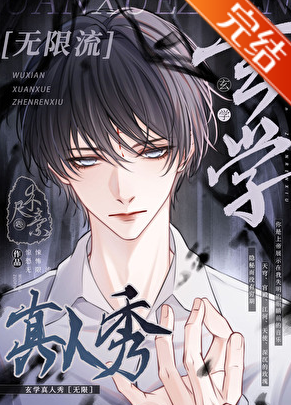
One-Sentence Positioning: Occult Reality Show [Unlimited] is a richly atmospheric Chinese BL unlimited-flow horror novel that turns a paranormal reality program into a merciless stage for ghosts, gods, folk rituals, cosmic dread, and one fragile-looking protagonist who is far more dangerous than anyone first assumes.
Who This Book Is For: This book is for readers who love supernatural horror with brains, folklore, and emotional weight. If you enjoy stories where each arc feels like a cursed case file, where myth and ritual are treated as living systems rather than decorative background, and where survival depends as much on interpretation as courage, Occult Reality Show [Unlimited] will likely be deeply addictive.
It is especially suited to readers who like Chinese unlimited-flow fiction, occult investigations, reality-show death games, folk horror, Cthulhu-flavored mystery, and BL dynamics built around trust, identity, sacrifice, and restrained devotion rather than fluffy sweetness. Shen Mingzhu’s premise is immediately striking: he cannot see the living, yet he can perceive the dead. That reversal gives the whole story a beautiful, unsettling logic. To everyone else, the world appears normal until horror intrudes. To him, reality has always been broken.
Who This Book Is Not For: This book is probably not for readers looking for a light paranormal romance, a fast-food survival game, or a simple “clear the dungeon and level up” structure. The story appears to lean into horror atmosphere, religious and folk-myth imagery, psychological pressure, and layered mysteries. Readers who dislike dense supernatural rules, ritual logic, creeping dread, body horror, or emotionally damaged protagonists may find it too heavy.
It may also not work for readers who want the romance to dominate every chapter. The relationship between Shen Mingzhu and Shan Shi seems designed as a slow-burning emotional anchor inside a much larger horror-mystery machine. If you only want banter, kisses, and quick romantic payoff, this may feel too shadowed, too plot-heavy, or too invested in the terror of its world.
3 Reasons to Recommend It:
The core concept is instantly cinematic. A supernatural reality show is already a strong hook. A tour group of occult practitioners being sent into haunted locations is even better. But the real genius is the way the novel frames performance itself as danger. This is not just a show about ghosts; it is a show edited, directed, and possibly controlled by something inhuman. The result is a deliciously modern horror premise: cameras, spectacle, audience manipulation, survival rules, and ancient terror all occupying the same screen.
The reality-show structure also gives the novel a natural engine. Every location can become a new stage. Every rule can be a trap. Every “episode” can hide a different kind of folklore, curse, ritual, or god. It is the kind of premise that makes readers want to keep moving from arc to arc, not simply to see who survives, but to understand what the show really is.
Shen Mingzhu is the kind of protagonist readers remember. Shen Mingzhu’s character design is powerful because it begins with contradiction. He is blind, pale, physically fragile-looking, and easy for others to underestimate. Yet his blindness is not written as mere vulnerability; it is also the opening through which he sees the truth others miss. He cannot see living people, but he can see ghosts. That detail alone gives him an eerie authority in a world where the dead may be more honest than the living.
What makes him compelling is the “beautiful, strong, miserable” tension embedded in the setup. He is not a loud action hero. He is a wounded, uncanny figure whose weakness and strength are inseparable. The more dangerous the supernatural world becomes, the more his difference matters. In a genre full of clever survivors, Shen Mingzhu stands out because his perception of reality is fundamentally alien from the beginning.
The horror feels rooted, not generic. One of the strongest appeals of the novel is its use of Chinese occult imagination: folk beliefs, ritual specialists, haunted travel routes, ghost stories, strange local customs, and metaphysical rules that feel culturally specific rather than imported from standard Western horror. The official tags point toward supernatural horror, unlimited flow, and Cthulhu elements, but the premise suggests a more distinctive blend than “monsters in a maze.”
This matters because good folk horror is never only about being scared. It is about place, memory, taboo, and the fear that old systems of meaning were never dead. Occult Reality Show [Unlimited] seems to understand that. Its horror does not need to rely only on jump scares or gore. It can unsettle readers through rules, names, rituals, missing histories, and the possibility that the world has always contained another dimension, waiting for the right program to expose it.
1 Turn-Off: The biggest potential drawback is the density of its supernatural architecture. A story that mixes unlimited-flow survival, reality-show mechanics, occult experts, ghost vision, folklore, cosmic horror, and BL emotional continuity asks a lot of the reader. For fans of layered horror, that complexity is the reward. For readers who prefer cleaner, simpler survival arcs, it may feel overwhelming or slow to fully open.
Editorial Review: Occult Reality Show [Unlimited] has one of those premises that feels engineered for a prestige horror adaptation. It begins with a brilliantly unnerving idea: what if a reality show about paranormal tourism was not pretending? What if the haunted villages, ritual sites, and forbidden locations were not props, but invitations? And what if the real director of the show was not the production team, but something watching from behind the visible world?
That is where the novel’s power lies. It understands that modern media can be just as terrifying as ancient superstition. Cameras do not make horror safer. Editing does not make truth clearer. A “program” can become a ritual. An audience can become part of the sacrifice. The more the story blurs entertainment and metaphysical violence, the sharper its concept becomes.
Shen Mingzhu is the perfect center for this kind of nightmare. His blindness immediately changes the reader’s relationship with fear. In most horror fiction, terror begins when the unseen becomes visible. For Shen Mingzhu, visibility itself is reversed. The living are absent to him; the dead are present. That makes him both isolated and uniquely equipped. He moves through a world where ordinary human interaction is already distorted, so when the supernatural erupts, he is not simply discovering that reality has cracks. He has been living inside those cracks all along.
This is also why the novel’s BL element has the potential to land with real force. In a story about perception, identity, and survival under cosmic pressure, intimacy cannot be casual. To be seen correctly becomes an act of love. To be trusted when the world insists on misreading you becomes a form of salvation. Shen Mingzhu and Shan Shi’s dynamic appears to sit inside that emotional territory: not a romance pasted onto horror, but a bond shaped by the same darkness that threatens to consume them.
The unlimited-flow structure gives the book momentum, but the occult framework gives it personality. Rather than relying on interchangeable game arenas, the story appears to draw power from specific myths, places, professions, and ritual systems. That creates a richer form of horror. The reader is not only asking, “How do they escape?” but also, “What is this place? What does this ritual mean? Who benefits from the fear? What did the dead fail to finish?”
That kind of question-driven horror is especially satisfying because it rewards attention. A clue may be hidden in a local custom. A ghost may be a victim, a witness, or a false face. A rule may not be arbitrary but theological. The show’s instructions may save the contestants in one moment and doom them in the next. In other words, survival is not only physical. It is interpretive.
The novel’s title is deceptively commercial. “Reality show” suggests spectacle, ratings, and entertainment. “Occult” suggests mystery, taboo, and ritual. “[Unlimited]” promises a structure of repeating trials. Together, they create a story that feels both bingeable and ominous: an episodic horror machine with a much larger god-shaped shadow behind it.
For Western readers familiar with reality-TV satire, found-footage horror, escape-room thrillers, or cosmic cult narratives, Occult Reality Show [Unlimited] offers a fascinating Chinese webnovel variation on those pleasures. It has the hook of a survival show, the dread of folk horror, the puzzle-box architecture of unlimited-flow fiction, and the emotional undertow of a damaged protagonist learning what it means to keep living in a world built to consume him.
This is not a soft ghost story. It is a grim, atmospheric, myth-heavy descent into a world where the dead are visible, the living are unreliable, and the camera may be the least frightening thing watching. For readers who like their horror intelligent, their romance slow-burning, and their protagonists beautiful, wounded, and quietly terrifying, Occult Reality Show [Unlimited] is exactly the kind of novel that lingers after the lights are off.
| 



 千斤顶
千斤顶






 English
 简体中文
简体中文 繁體中文
繁體中文 한국 사람
한국 사람 日本語
日本語 Deutsch
 русский
 بالعربية
 TÜRKÇE
 português
 คนไทย
คนไทย french