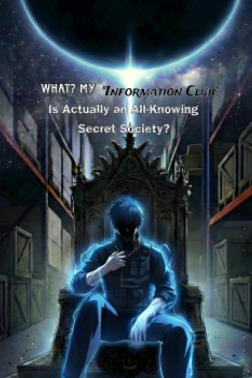
Recommend books What? My Information Club Is Actually an All-Knowing Secret Society? : A Clever Apocalypse Web Novel About ARGs, Conspiracy, and Accidental Cult-Building
In the burning heat of Jakarta, Arlen is a broke car wash employee with one last hope, his unpublished novel, The Frozen Era. Knowing that nobody reads books anymore, he decides to sell "experience". He makes an Alternate Reality Game (ARG), hiding impossible puzzles across the website, application, and even real life place on another city, to find the smartest readers for his story about a tropical apocalypse. He expected to find bored gamers, employee, or maybe some broke people like him. Instead, he recruited a group of dangerous strangers. These elite few cracked his codes and entered his secret chat room. They are convinced that Arlen, Known to them only as "The Architect", is not a fiction writer, but a whistleblower leaking secret information from the future, about the end of the world.
A sly, high-concept apocalypse serial that fuses ARG puzzle culture, secret-society paranoia, and misunderstanding-comedy into a story that feels like a crossover between an internet conspiracy thriller and a slow-burn end-of-the-world cult origin tale.
Who This Is For
This is for readers who love premise-first web fiction—the kind of story where one genuinely clever idea does not just decorate the plot but drives the entire reading experience. If you enjoy novels built around hidden identities, escalating misunderstandings, online communities, coded messages, and the thrill of watching ordinary people accidentally create something much larger and more dangerous than they intended, this series is almost custom-built for you. The public synopsis makes that appeal very clear: Arlen is a broke Jakarta car-wash worker with an unpublished novel, so he builds an ARG to market it, only to attract readers who become convinced he is not a struggling writer but “The Architect,” a future informant leaking the truth about an incoming apocalypse.
It is also a strong fit for readers who like apocalypse fiction with a cerebral, socially viral twist rather than a purely combat-first structure. The listed genres and tags point toward a very particular blend—Action, Comedy, Drama, Fantasy, Mystery, Psychological, Sci-fi, and Supernatural, with tags including Apocalypse, Army Building, Chat Rooms, Clever Protagonist, Misunderstandings, Secret Identity, Secret Organizations, Survival, Monsters, and Zombies. That combination suggests a story less interested in brute-force disaster spectacle than in how information, belief, and narrative itself can assemble followers, bunkers, institutions, and eventually power.
Who This Is Not For
This is probably not for readers who want immediate face-to-face ensemble chemistry, constant physical action, or a fast payoff on every mystery. Even the visible reader feedback hints that the novel is unusually patient with its setup and cast structure: one review notes that the protagonist goes a very long time without meaningfully meeting members of the main cast in person, while another praises the story overall but mentions that the diction can feel a little technical and that the novel takes its time before the exploration angle fully kicks in. If your tolerance for delayed convergence is low, this may feel more intriguing than instantly addictive.
It may also be a weaker match for readers who dislike serial fiction that grows outward as it goes. The author has publicly discussed expanding worldbuilding, revising early chapters, and smoothing style and minor inconsistencies in the first arc, which is often a sign of an ambitious story that is evolving in real time rather than arriving fully locked. For many web-serial readers that is part of the charm; for others it can feel a little rough around the edges.
3 Reasons to Recommend
The central hook is legitimately original.
A lot of web fiction has good ingredients. Far fewer series have a premise you can pitch in one sentence and immediately understand why people would click. This one absolutely does. A broke writer creates a transmedia game to sell his unpublished apocalypse novel, then accidentally recruits a circle of brilliant, dangerous believers who think his fiction is classified truth from the future. That is not just funny; it is structurally fertile. It gives the story mystery, comedy, dread, internet culture, and apocalyptic momentum all at once. Better still, the misunderstanding is not a disposable gag but the engine of the plot: every message Arlen sends risks becoming doctrine to people who are already emptying bank accounts and building bunkers. That is the sort of premise that feels both contemporary and weirdly timeless.
It seems to understand that paranoia can be funny without losing its menace.
One of the hardest tonal balances in fiction is making a story genuinely amusing while keeping the stakes real. Based on the public synopsis and genre profile, this novel appears to manage exactly that balancing act. On paper, the idea of a desperate writer accidentally founding what looks like an apocalyptic secret society has obvious comic potential. But the series also frames that joke against a genuinely ominous backdrop: tropical heat that may be lying, a coming freeze, elite followers interpreting fiction as prophecy, and a protagonist who alone believes the whole thing is fake. That tonal contradiction is where the book’s personality seems to live. It is funny because it is absurd, and unsettling because the absurdity keeps materializing into reality.
The reader response suggests real staying power, not just a strong gimmick.
Plenty of serials hook attention with a sharp premise and then flatten out. The most encouraging public sign here is that the visible reception does not read like people praising only chapter one. The series page shows strong platform engagement—41.8k views, 1,961 favorites, 95 chapters, a 4.9 rating from 24 ratings, and an ongoing rapid-release pace—and the visible reviews specifically say it stays interesting well past the opening stretch, praising the characters, pacing, worldbuilding, villain work, and the sense that “so many things have been happening” without becoming boring. For a concept-heavy serial, that matters. It suggests the novel is not surviving on its elevator pitch alone.
1 Reason to Hesitate
The clearest reason to hesitate is that the story appears to demand patience with delayed payoff, large-cast management, and a somewhat evolving early arc. One reader’s biggest concern was that the protagonist had not meaningfully met the main cast early on; another flagged some technical phrasing; and the author has openly said the first 20 chapters may be revised to smooth stylistic differences and minor plot inconsistencies. None of that sounds fatal—in fact, it can be the signature of an ambitious web serial growing into itself—but it does suggest this may be the kind of novel that rewards commitment more than instant consumption.
Editor’s Verdict
What? My “Information Club” is Actually an All-Knowing Secret Society? looks like exactly the kind of web novel that reminds you why serial fiction can still feel thrillingly modern. Not because it is polished in a traditional publishing sense, and not because it chases prestige, but because it takes a very internet-native idea—gamified storytelling, encrypted communities, conspiratorial overinterpretation, parasocial belief—and turns it into narrative fuel. The result, at least from the public-facing material, feels less like a standard apocalypse story than like a novel about how apocalypse stories become real once enough people decide to live inside them.
That is the book’s smartest move. Arlen is not introduced as a chosen one, a soldier, or a genius mastermind with total control. He is introduced as a broke, unpublished creative trying to survive and trying to sell “experience” in a world where books no longer move people on their own. That makes the escalation more interesting. He is not shaping a cult because he wants power; he is improvising marketing, and the world around him keeps rewarding the performance as if it were prophecy. There is something deliciously modern in that. The line between fiction, branding, community, and belief has rarely felt thinner, and this premise weaponizes that anxiety in a way that is both entertaining and slyly observant.
The novel also seems to understand that mystery is not just about withholding facts but about controlling interpretation. Readers are not only waiting to find out whether the ice is really coming, or what is actually happening in the world. They are watching a story about people reading a story, misreading it, operationalizing it, and building real structures around it. That layered setup gives the book a richness many apocalypse serials lack. The monsters, survival stakes, secret organizations, and army-building elements may eventually deliver the larger spectacle, but the deeper appeal appears to lie in watching information itself become power.
Would I call it universally accessible? Probably not. The very things that make it appealing—its patience, its layered premise, its dependence on misunderstanding and belief—may frustrate readers who want cleaner, faster, more direct action beats. But for readers who enjoy clever-concept serial fiction with conspiracy energy, chatroom paranoia, and the slow transformation of a joke into a movement, this looks like one of those rare web novels whose title sounds gimmicky until you realize the gimmick is the story’s greatest strength.




 千斤顶
千斤顶









 English
 简体中文
简体中文 繁體中文
繁體中文 한국 사람
한국 사람 日本語
日本語 Deutsch
 русский
 بالعربية
 TÜRKÇE
 português
 คนไทย
คนไทย french