|
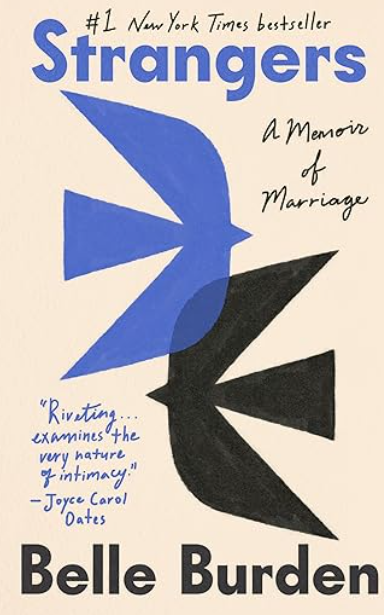
One-line Positioning A razor-sharp divorce memoir that reads like a love story collapsing into a psychological mystery, as one woman tries to understand how a twenty-year marriage could end so suddenly that the man beside her begins to feel like a stranger.
Who This Is For This is for readers who want memoirs that sit at the crossroads of intimacy, betrayal, gender, and self-reckoning. If you are drawn to books about marriage under pressure, female self-erasure inside “good” domestic life, and the terrifying disorientation of realizing that the person you trusted most may not have been knowable in the way you believed, Strangers has obvious appeal. It is also a strong fit for readers who like literary nonfiction with emotional velocity rather than detached observation.
Who This Is Not For This is not for readers looking for a scandal memoir built purely on exposure, revenge, or sensational gossip. It is also not ideal for anyone who wants a neat therapeutic arc, because the material here appears less interested in easy answers than in the destabilizing fact that some marriages do not break gradually so much as reveal, in retrospect, how much of their architecture was built on assumption. Readers who prefer fiction-like plot twists without sustained emotional analysis may find it too interior, while those who want a tidy manual on spotting red flags may find its honesty about uncertainty unsettling rather than reassuring.
3 Reasons to Recommend It - It takes a familiar subject and makes it feel genuinely frightening.
There is no shortage of memoirs about marriage ending badly, but Strangers appears to understand that the most haunting version of betrayal is not always loud. According to the official description, Burden is living through the early days of the pandemic with her family on Martha’s Vineyard when her husband of twenty years abruptly announces that he is leaving, and the narrative power comes from how little warning the moment seems to contain. That emotional logic is what gives the book its unusual charge: it treats marital collapse not just as heartbreak, but as a crisis of perception. The person who leaves is not merely cruel or unfaithful; he becomes unreadable. In that sense, the memoir seems to approach divorce almost like a mystery story, except the mystery is whether intimacy itself can ever be trusted. - It appears to understand that the real subject is not only him, but the woman she had to become in response.
The most compelling detail in the official copy is not the husband’s departure but Burden’s transformation. Penguin Random House’s description explicitly frames the book as the story of how the discreet, compliant woman once nicknamed “Belle the Good” gives way to someone braver and more willing to use her voice. That makes the memoir feel larger than a marital postmortem. Its center of gravity shifts from “What did he do?” to “What did I believe, suppress, excuse, and inherit that made this life possible?” That is the kind of reframing that often separates a merely juicy memoir from one with real staying power. The betrayal may be the inciting wound, but the book’s deeper promise is female self-recognition. - The writing has clearly been positioned, by both publishers and reviewers, as literary but compulsively readable.
The official page gathers praise that consistently points in the same direction: this is being received not just as moving but as gripping, a memoir with the pull of genre fiction. The language of the endorsements is telling, describing it as probing, candid, nail-biting, heartbreaking, affirming, and even, in one line, part love story, part horror story, part financial thriller. That combination suggests a book whose appeal is not limited to readers of elite literary memoirs. It promises style, yes, but also momentum. For many readers, that is the ideal nonfiction mix: elegant enough to feel substantial, urgent enough to inhale over a weekend.
1 Reason to Hesitate The strongest reason to hesitate is that Strangers seems to draw its power from ambiguity rather than resolution. Even the excerpted material resists the comforting idea that there must have been one obvious sign, one single clue, one clean explanation that could have prevented the collapse. For some readers, that honesty will be the book’s greatest strength. For others, it may be the most distressing thing about it, because it denies the fantasy that vigilance alone can save us from intimate betrayal. This does not sound like a memoir that offers easy closure; it sounds like one that sits with the terror of not fully knowing, and that can be a hard emotional place to stay.
Editor’s Note Strangers looks like the kind of memoir that lands because it refuses to flatter the reader. A lesser version of this story would offer simple villains, obvious clues, and the pleasurable certainty that catastrophe can always be predicted in hindsight. Burden seems to argue for something much more unnerving: that love can be real, domestic life can appear stable, and a marriage can still contain invisible fault lines that only become visible after the collapse. That premise alone gives the book unusual force. It is not merely about infidelity or abandonment. It is about the failure of narrative itself, about what happens when the story you have told yourself about your life no longer explains the facts of your life. What elevates the material, at least from the public excerpts and positioning, is that Burden does not seem content to write a grievance document. The memoir is framed as a reckoning with family history, femininity, compliance, money, silence, and the scripts women inherit about how to behave when love curdles into humiliation. That gives the book a broader cultural resonance. The husband’s betrayal may be the detonator, but the blast radius is much larger: class, marriage, motherhood, selfhood, and the cost of being “good” in a structure that rewards female accommodation until the moment it doesn’t. That is where the book appears to move from personal testimony into something sharper and more broadly legible. There is also a very modern fear embedded in the book’s setup. The marriage ends in the early pandemic, a historical moment already charged with confinement, unreality, and domestic compression. In that context, the husband’s abrupt transformation becomes even more unsettling, as if the safety of home itself has turned unreliable. Public excerpts emphasize the surreal cruelty of the separation scene, and that surrealism seems central to the memoir’s effect. Strangers does not merely ask whether a marriage can end. It asks how a shared life can become emotionally illegible so fast that one partner seems to exit it “like an actor shrugging off a costume.” That is a chilling image, and it suggests a memoir more interested in existential shock than conventional breakup catharsis. For the right reader, that seriousness is exactly the draw. This appears to be a memoir for people who want nonfiction that exposes the terrifying fragility of intimacy without surrendering to self-pity. Its commercial success and critical framing suggest it has connected because it offers both immediacy and depth: a page-turning personal implosion, but also a larger meditation on what women are taught to ignore, endure, and normalize in the name of love. If it fulfills the promise of its public materials, Strangers is not simply a divorce memoir. It is a study in marital disillusionment that asks whether heartbreak is sometimes less about losing love than about discovering how much of love depended on what you could not afford to see.
| 



 千斤顶
千斤顶










 English
 简体中文
简体中文 繁體中文
繁體中文 한국 사람
한국 사람 日本語
日本語 Deutsch
 русский
 بالعربية
 TÜRKÇE
 português
 คนไทย
คนไทย french