|
One-line Positioning A shamelessly addictive billionaire-baby melodrama in which betrayal, public humiliation, an unexpected child, and a fiercely protective hero collide to create exactly the kind of emotionally maximalist romance web-fiction readers binge in one sitting.
Who This Is For This is for readers who love high-drama contemporary romance with all the classic guilty-pleasure triggers turned up: a heroine set up and disgraced, a cold powerful man who becomes unexpectedly all-in, a child who raises the emotional stakes, and a revenge-tinged plot that keeps promising payback. If you enjoy CEO romance, runaway-with-a-baby setups, betrayal arcs, and stories where the heroine’s suffering is eventually answered with status reversal and emotional vindication, this novel knows exactly how to scratch that itch.
Who This Is Not For This is not for readers who want subtle literary realism, emotionally restrained relationship building, or clean contemporary romance without old-school web-novel intensity. It is also a poor fit for anyone uncomfortable with coercive or murky-consent opening scenarios, since the story begins with Velma being drugged, ending up with a stranger, and waking in the aftermath of a sexual encounter that she did not fully understand in the moment. Readers who dislike contrivance, melodrama, or “suffer now, triumph later” plotting may find it too heightened to enjoy.
3 Reasons to Recommend It - It delivers the kind of hook that web-romance readers click for instantly and stay for shamelessly.
The novel wastes no time establishing its engine. Velma is trapped in a setup, wakes up after a night with a stranger, and that stranger—Albert—is not framed as disposable one-night-stand scenery but as the man who will matter. Even the official synopsis leans into his possessive pivot with “Let’s go home,” which tells you at once that this is not a delicate romance about ambiguity; it is a big, emotionally declarative story about a heroine in crisis and the powerful man who steps into the wreckage. That clarity is one of the book’s greatest strengths. It understands the commercial appeal of an immediate, high-stakes premise and commits to it without apology. - Its emotional architecture is pure binge-fuel: shame, rescue, regret, and reversal.
What gives The Abandoned Bride its real compulsive power is not merely the pregnancy-and-CEO framework, but the layering of humiliation and comeback. Later chapter material makes clear that Velma is not only wounded by circumstance but publicly humiliated, including a moment where she goes to explain herself only to discover Alvin is involved with her worst enemy. By that point Albert is already positioned as the man at her side, and the novel doubles down on the promise that someone who was discarded will eventually become the center of gravity. That is catnip for readers of this lane. Stories like this work when they make the reader feel the insult personally and then dangle the pleasure of eventual reversal. This one appears to understand that emotional economy very well. - Albert is written in the tradition of the fantasy-rescue male lead, but with enough plot function to keep him useful.
A lot of billionaire romance heroes are all aura and no utility. Albert, at least from the visible material, is more than that. In Chapter 1 he decides he has to find Velma and take responsibility after seeing the bloodstain on the sheets; later chapters show him protecting Velma and her son Dylan, worrying about her safety, mobilizing resources, and stepping fully into the role of defender rather than decorative alpha. That matters because this kind of novel lives or dies on whether the male lead feels like a narrative force or just a bundle of tropes in a suit. Albert seems designed to satisfy readers who want the fantasy of powerful devotion, not just powerful wealth.
1 Reason to Hesitate The biggest reason to hesitate is also the book’s biggest warning label: this is very much an early-2020s web-romance melodrama, and that means readers have to accept a sensational opening, dubious-consent circumstances, villain-driven setup, broad emotional strokes, and a taste for excess over nuance. For the right audience, that is the fun. For the wrong audience, it will feel manipulative and exhausting rather than cathartic.
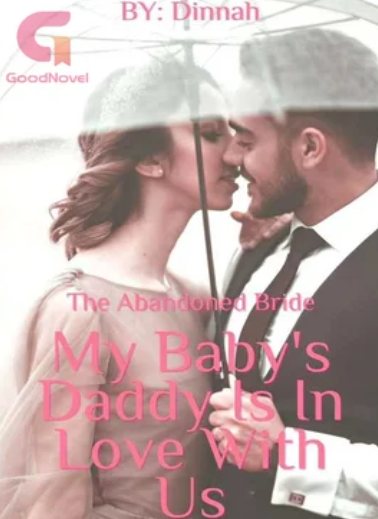
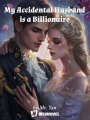
Editor’s Note The Abandoned Bride: My Baby’s Daddy Is In Love With Us is the sort of title that tells you exactly what kind of reading experience it intends to deliver, and to its credit, the book seems to honor that promise. This is not a novel interested in restraint. It is interested in emotional compulsion. It wants the reader outraged on Velma’s behalf, intrigued by Albert’s intensity, furious at the forces that set her up, and hungry for each new phase of vindication. In a crowded field of CEO-and-baby fiction, that commitment to velocity is a selling point. What stands out most is the novel’s instinct for escalation. It begins with violation and confusion, pivots into responsibility and attachment, then widens into humiliation, family and romantic fallout, public disgrace, and eventually a child whose presence transforms the central relationship from mere chemistry into a more durable emotional alliance. By the later chapters visible on the page, Albert is no longer simply “the stranger from that night”; he is an active guardian figure in Velma’s life, while the story keeps feeding the reader fresh reasons to root for her restoration and for other people’s regret. That is a very specific and very effective web-fiction pleasure. There is also something undeniably canny about how the novel packages its heroine. Velma is not written as a cool, untouchable avenger from page one. She is hurt first. Cornered first. Shamed first. That matters, because in this subgenre the fantasy is not simply female triumph; it is female triumph after intolerable emotional cost. The suffering is the investment, and the payoff is meant to feel earned through endurance. Readers who enjoy that structure will likely find this book very easy to inhale, especially since it is completed at 62 chapters and clearly built for serialized momentum. That said, the book’s appeal depends almost entirely on a reader’s tolerance for intensity. If you meet it on its own terms—as a full-throttle, trope-forward, highly dramatic romance about betrayal, rescue, motherhood, and payback—it has the makings of a very satisfying binge. Not because it is subtle, but because it is not trying to be. It is trying to make you gasp, seethe, and keep reading. In this corner of the market, that is often exactly what success looks like.
| 



 千斤顶
千斤顶






 English
 简体中文
简体中文 繁體中文
繁體中文 한국 사람
한국 사람 日本語
日本語 Deutsch
 русский
 بالعربية
 TÜRKÇE
 português
 คนไทย
คนไทย french