|
One-line positioning:
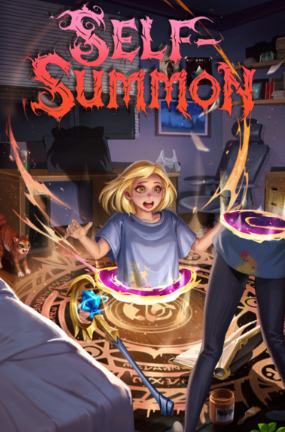
A sharp, funny urban-fantasy LitRPG with a genuinely original hook, Self-Summon turns demonic transformation and monster evolution into a story about survival, self-command, and the unnerving possibility of becoming your own master and minion at once.
Best for:
Readers who like premise-first fantasy, female-led LitRPG, urban supernatural settings, steady progression, and stories that mix comedy, action, and slice-of-life texture without abandoning mechanical depth. It should especially click for anyone who enjoys unusual system design, non-human evolution, and protagonists who feel scrappy rather than overpowered from page one.
Not for:
Readers looking for a grimdark power fantasy, a fully battle-driven progression novel, or a finished series with a long-established arc. It may also be a weaker fit for those who dislike whimsical protagonists, lighter tonal beats in the middle of supernatural danger, or web serials that are still in their early momentum-building stage.
3 reasons to recommend it - The core concept is terrific.
The image of a desperate young artist accidentally summoning herself instead of a demon is exactly the kind of high-concept hook that sells a web novel in one sentence, and the added wrinkle—that she can issue Orders to herself and is forced to obey them—gives the book an immediate identity of its own. - The heroine sounds refreshingly relatable.
Both the official synopsis and multiple early reader reviews emphasize Angelica as a stressed, sensible, grounded lead whose decisions feel coherent within her circumstances. That relatability matters in a story built around bizarre mechanics, because it keeps the supernatural escalation tethered to a recognizably human center. - It appears to understand tonal balance.
The author explicitly promises steady progression, regular action, and a mostly lighthearted tone, while platform tags point to comedy, monster evolution, secret identity, slice of life, and urban fantasy. Early reader responses repeatedly call the story fun, compelling, and creative, which suggests the novel’s biggest strength may be how comfortably it moves between weirdness, humor, and forward motion.
One reason to hesitate:
The biggest caution is that it is still an early-stage serial. On Royal Road it currently sits at 29 chapters and 266 pages, with readers already praising the premise more than a fully proven long-range payoff, so cautious readers may want to wait until the larger arc has had more time to mature. A few comments also note that Angelica can feel whimsical in moments where some readers might prefer a harder-edged response.
Editor’s note:
Self-Summon feels like the kind of web serial that wins readers by being instantly legible yet slightly strange in a way most genre fiction is not. The pitch is catchy, the system looks distinctive, and the protagonist seems built to carry both the comedy and the existential unease of becoming something demonic without losing her ordinary, struggling self. It may be too early to call it essential reading, but as an emerging LitRPG with a standout elevator pitch and strong early reader response, it already looks more memorable than most new arrivals.
| 



 千斤顶
千斤顶










 English
 简体中文
简体中文 繁體中文
繁體中文 한국 사람
한국 사람 日本語
日本語 Deutsch
 русский
 بالعربية
 TÜRKÇE
 português
 คนไทย
คนไทย french