|
One-line positioning:
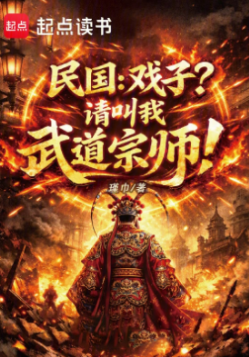
A Republic-era fantasy martial arts web novel that turns stage performance into real power, blending Peking-opera atmosphere, underdog grit, and nationalist action in a chaotic old-Beijing setting.
Who this book is for:
This book is for readers who enjoy Republican-era China settings, opera-troupe stories, “from nobody to legend” character arcs, game-like progression hooks, and martial-arts fantasy with strong local Chinese flavor.
Who this book is not for:
This book may not work for readers who want strict historical realism, very fast non-stop leveling, or stories with no opera and stage-performance material. This is an inference based on the official premise and the author’s own note that the novel deliberately includes opera elements and focuses on the everyday life of a troupe in a turbulent era.
3 reasons to recommend it: - The hook is genuinely fresh: Lu Cheng starts as a struggling martial-role actor in a Peking-opera troupe, then gains martial insight and rewards by fully entering each performance, which makes the power system feel tied to culture rather than copied from standard game fantasy.
- The setting has strong atmosphere. The official synopsis places the story in Beiping during the twentieth year of the Republic, with warlords fighting, the opera world sinking, and ordinary lives treated as disposable, giving the novel a harsher and more distinctive tone than generic upgrade fantasy.
- It has clear visual escalation. The synopsis moves from “Lin Chong Flees by Night” and spearwork, to “Wu Song Slays the Tiger,” to “Havoc in Heaven,” then to humiliating gang forces, Japanese ronin, and foreign powers, suggesting a satisfying rise from troupe nobody to martial legend.
1 reason to hesitate:
If you are looking for a huge, deeply layered epic world right away, this may feel smaller in scale than expected at first, because the author explicitly said the book’s worldview is not especially grand and that the focus is more on a troupe’s lived experience, emotional texture, and stage-versus-life contrast.
Editor’s comment:
An Actor? No, Call Me a Martial Arts Grandmaster! looks appealing because it does not just paste martial-arts growth onto a random historical skin. Its real advantage is that the advancement fantasy grows directly out of opera performance, role immersion, and old-Beijing street culture. That gives it a sharper identity than many routine progression novels.
| 



 千斤顶
千斤顶










 English
 简体中文
简体中文 繁體中文
繁體中文 한국 사람
한국 사람 日本語
日本語 Deutsch
 русский
 بالعربية
 TÜRKÇE
 português
 คนไทย
คนไทย french