One-Sentence Positioning
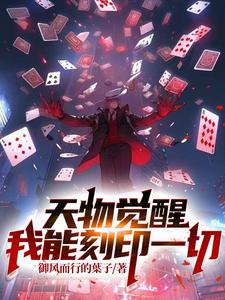
Tianwu Awakening: I Can Imprint Everything is a stylish urban high-martial fantasy that fuses academy competition, supernatural awakening, magic-like combat, sharp youth drama, and a dangerously charismatic genius protagonist into a large-scale modern power fantasy with real emotional and cinematic bite.
Who This Book Is For
This book is for readers who love modern cultivation-style fantasy with schools, awakenings, elite academies, ranking systems, alien threats, secret organizations, gifted young fighters, and protagonists who are calm, theatrical, and far more dangerous than they first appear.
It is especially well suited for fans of Chinese urban fantasy who want more than simple level grinding. The novel has the appeal of a high-stakes academy story, but it also carries a larger post-catastrophe world behind it: dimensional cracks, alien races, strange beasts, national institutions, martial systems, and a society where one awakening can decide a person’s future. Readers who enjoy clever male leads, no-harem/no-romance momentum, intense friendship dynamics, stylish combat names, and emotionally charged “youth on a grand stage” storytelling will find this highly bingeable.
Who This Book Is Not For
This may not be the right novel for readers who want a quiet, realistic coming-of-age story or a romance-driven urban fantasy. The book is loud in the best web-novel sense: dramatic entrances, shocking battles, genius reveals, institutional conflict, supernatural terminology, and an ever-expanding cast of powerful figures. Readers who dislike academy arcs, overpowered-talent narratives, long serial structures, or stylized combat systems may find the energy overwhelming.
It may also be less suitable for readers who need a compact story with fast resolution. With more than two million Chinese characters and an ongoing status, this is clearly built as a long-form saga rather than a short, self-contained fantasy.
3 Reasons to Recommend It
The opening has immediate cinematic impact
The novel knows how to seize attention. It does not begin with a quiet explanation of the world; it opens with thunder, rain, a blood-stained arena, a corpse, a stunned crowd, and Jin Feichen standing calmly at the center of it all. That image instantly defines the book’s attitude. This is not a timid academy fantasy. It is a story where youth, violence, spectacle, and destiny collide in public view.
That kind of opening works because it creates questions before it gives answers. Who is Jin Feichen? Why is he so calm? What kind of society allows a “death pool” duel among students? What exactly is an awakened Tianwu? The novel hooks the reader not only through action, but through atmosphere. It feels theatrical, almost stage-lit, with the protagonist already performing for a world that does not yet understand him.
Jin Feichen is a protagonist built for high-engagement serialization
A strong serialized fantasy needs a protagonist readers want to follow for hundreds, even thousands, of chapters. Jin Feichen has that quality. He is not merely “talented”; he is composed, ironic, unpredictable, and faintly dangerous. His charm comes from the way he treats pressure as performance. While others panic, he smiles. While others follow the rules of fear, he seems to be reading a different script entirely.
This makes him an especially effective lead for a no-romance, youth-driven power fantasy. Without needing a romantic subplot to carry emotional investment, the story leans into personality, rivalry, friendship, spectacle, and personal mythmaking. Jin Feichen’s appeal is not only whether he can win, but how he chooses to present himself while winning. That gives the novel a slick, confident flavor.
The worldbuilding gives the academy setup real scale
At first, the book appears to be an awakening-school story, but the background quickly expands into something much larger. The world is not just modern society plus supernatural powers. It is a civilization reshaped by dimensional cracks, alien invasions, monstrous beasts, spiritual energy, and the arrival of “司命天物” as humanity’s means of resistance.
That broader setting gives every school competition and awakening result more weight. A student’s power is not simply a personal talent; it is tied to survival, national structure, social class, institutional ambition, and humanity’s long war against external threats. This is what makes the novel more satisfying than a simple genius-student story. The academy is only the front door. Behind it is a world with history, trauma, hierarchy, and war.
One Drawback
The biggest drawback is that the novel’s style is unapologetically heightened. It loves dramatic reveals, named techniques, genius aura, cool entrances, and large-scale emotional staging. For readers who prefer understated prose or grounded realism, that intensity may feel excessive. The same theatrical quality that makes the book exciting can also make it feel too stylized if you are not already in the mood for high-energy Chinese web fantasy.
Editor’s Review
Tianwu Awakening: I Can Imprint Everything is the kind of novel that understands why readers come to urban high-martial fantasy in the first place. They want the thrill of a modern world cracked open by the supernatural. They want the pressure of a society where talent is measured, ranked, feared, and weaponized. They want a protagonist who can walk into a storm and somehow make the storm feel like part of his entrance.
On those terms, the novel delivers with confidence.
The strongest early impression is atmosphere. The story has a flair for dramatic staging: rain-soaked skies, public duels, stunned crowds, mysterious cards, elite academies, and powers that feel half martial art, half magic performance. The title’s promise, “I Can Imprint Everything,” suggests a flexible and potentially terrifying ability, but the book’s real hook is not just the power itself. It is the way power becomes identity. In this world, awakening defines future, class, danger, and possibility.
Jin Feichen is the center of that identity game. He is written less like an ordinary student and more like a magician stepping onto a battlefield. That could easily become empty coolness, but the novel gives him enough strangeness and emotional distance to make him intriguing. He has the air of someone who has already lived with disappointment, boredom, or exhaustion before the story truly begins. When the “stage” finally reaches out to him, as the synopsis suggests, the result is not simple ambition. It feels like awakening in both the literal and psychological sense.
The novel’s “youth story” element is also more important than it first appears. Many urban high-martial novels treat school as a convenient power ladder. Here, the academy and awakening framework are tied to adolescence, identity, and the cruel moment when society tells young people what they are worth. That gives the story emotional sharpness. A teenager’s future can be transformed in seconds. A so-called failure can become a miracle. A genius can be exposed, challenged, or destroyed. The result is a world where coming-of-age is not sentimental; it is brutal, public, and weaponized.
What makes the book especially readable is its combination of swagger and scale. The early chapters have humor and attitude, but the world behind them is genuinely dangerous. Humanity has survived catastrophe, alien invasion, and monstrous threats. Modern civilization exists, but it is no longer protected by technology alone. That tension between everyday youth culture and apocalyptic history gives the novel its distinctive texture. A character can joke like a modern teenager in one scene and stand at the edge of a mythic battle system in the next.
For Western readers familiar with progression fantasy, superhero academies, or anime-style battle schools, Tianwu Awakening: I Can Imprint Everything would feel both accessible and distinctly Chinese. It has the addictive structure of an academy progression story, but its terminology, national framework, martial hierarchy, and awakening mythology give it a different flavor from Western magic-school fiction. It is less about learning spells in a cozy institution and more about being processed by a civilization that needs weapons, geniuses, and survivors.
The no-female-lead/no-romance positioning also shapes the reading experience. Instead of diverting attention into romantic tension, the novel appears focused on growth, combat, friendships, rivalries, institutions, and the protagonist’s expanding legend. For some readers, that will be a major advantage. The emotional drive comes from ambition, loyalty, spectacle, and self-definition rather than romantic attachment.
Ultimately, Tianwu Awakening: I Can Imprint Everything is a high-impact, high-style serial fantasy for readers who want their urban martial fiction big, dramatic, and cool without apology. It has the academy hook, the genius protagonist, the supernatural system, the national-scale threat, and the theatrical confidence to make every major scene feel like it is happening under a spotlight. If you enjoy watching a strange, talented, unreadable young man step onto the world’s stage and slowly become impossible to ignore, this is exactly the kind of long-form web novel that can consume your reading schedule.
|




 千斤顶
千斤顶










 English
 简体中文
简体中文 繁體中文
繁體中文 한국 사람
한국 사람 日本語
日本語 Deutsch
 русский
 بالعربية
 TÜRKÇE
 português
 คนไทย
คนไทย french