One-Line Positioning
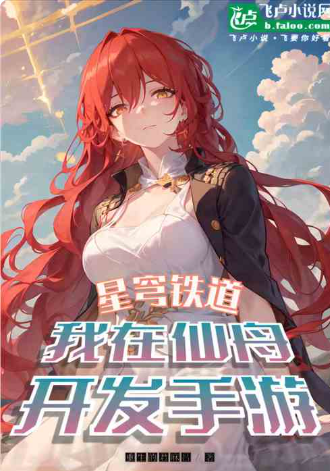
Honkai: Star Rail — Developing a Mobile Game on the Xianzhou is a wildly meta fan-fiction power fantasy that turns game development itself into the ultimate cheat skill, blending isekai wish fulfillment, fandom in-jokes, and cosmic-scale reaction drama into one gleefully self-aware package.
Who This Book Is For
This novel is for readers who already love Honkai: Star Rail and want a fan-fiction premise that plays directly with the fun of knowing the canon from the outside. The central pleasure is simple but addictive: Lin Yu arrives inside the Star Rail universe, develops Honkai: Star Rail as an in-world mobile game, and watches the characters, factions, and even higher powers react to their own stories being transformed into entertainment.
It is especially suited to readers who enjoy reaction fiction, system novels, meta comedy, light sci-fi game-development fantasy, and stories where the protagonist’s “cheat” is not brute strength but information control. Lin Yu does not conquer the world with a sword. He changes the world by packaging prophecy, lore, character trauma, and future events into a game everyone wants to play.
Fans who enjoy Xianzhou Luofu characters, Stellaron Hunter intrigue, Genius Society weirdness, Penacony-style spectacle, and the broader chaos of HoYoverse-style mythology will find a lot to chew on here. The book’s appeal depends heavily on recognition. The more familiar you are with the original game’s characters, story arcs, memes, and emotional beats, the more satisfying the novel becomes.
Who This Book Is Not For
This is not the ideal starting point for readers who know nothing about Honkai: Star Rail. The book is built around familiarity: character names, faction dynamics, major plot arcs, emotional reveals, and the pleasure of watching canon figures react to a game that mirrors or predicts their reality. Without that context, much of the humor and dramatic irony will lose force.
It is also not for readers looking for a tightly literary, character-first fantasy novel with subtle prose and slow psychological realism. This is commercial web fiction in its most unapologetic form: fast chapters, serial momentum, escalating spectacle, fandom payoffs, and a premise designed to deliver repeated “wait until they see this” moments. Readers who dislike fan-service, reaction chapters, or long-running serialized structures may find it excessive.
Three Reasons to Recommend It
Reason 1: The premise is instantly addictive.
The strongest hook of the novel is its brilliant inversion of the usual isekai cheat. Lin Yu does not merely arrive with secret knowledge of the future. He turns that secret knowledge into a product. By developing Honkai: Star Rail inside the world of Honkai: Star Rail, he becomes less a conventional hero and more a narrative disruptor.
That gives the story a delightful meta charge. Every game release, character trailer, story update, or emotional scene becomes a weaponized revelation. The people of this universe are not just playing a game; they are consuming an uncanny reflection of their own lives, secrets, tragedies, and possible futures. The result is a steady stream of dramatic irony: the reader knows why something matters, Lin Yu knows why it matters, and the characters slowly realize that entertainment may be indistinguishable from prophecy.
This makes the book highly bingeable. The structure naturally creates anticipation. What happens when a character sees their own backstory? What happens when a faction realizes the game knows too much? What happens when divine or cosmic beings notice that someone is packaging reality into updates? The premise practically manufactures cliffhangers.
Reason 2: It understands the emotional economy of fandom.
Many fan-fiction works borrow characters, but this one understands why readers respond to them. The fun is not only seeing familiar names appear. The fun is seeing those characters confronted with their own mythologies.
In a game like Honkai: Star Rail, much of the appeal comes from layered lore, hidden trauma, faction politics, stylish presentation, and emotionally charged reveals. This novel takes those ingredients and reframes them as public experience. That allows the story to revisit beloved moments from a new angle: not simply as plot, but as spectacle, scandal, confession, marketing event, and psychological ambush.
That is where the novel becomes more than a simple “I know the future” power fantasy. Lin Yu’s mobile game does not just entertain the world; it destabilizes it. Knowledge becomes influence. Updates become political events. Character PVs become emotional detonations. Lore becomes leverage. The protagonist’s power lies in understanding what the audience wants, what the characters fear, and what the world is not ready to admit about itself.
For fans, this is deeply satisfying. It turns the act of playing, watching, reacting, and theorizing into the story itself. In other words, it makes fandom behavior part of the plot engine.
Reason 3: The serial format suits the concept extremely well.
This is the kind of premise that thrives in long-form web serialization. Each new arc can revolve around a fresh game update, a new character reveal, a new faction reaction, or a new piece of lore reaching the wrong audience at exactly the right time. The novel’s length becomes part of its appeal because the setup is designed for accumulation.
A shorter version of this story might burn through the novelty too quickly. A long-running version can keep widening the ripple effect. At first, the fun is local: characters reacting to a strange game. Then the implications grow. The game is too accurate. The information is too dangerous. The protagonist is too well-positioned. The audience is too large. The world begins to change because people are not just consuming fiction; they are responding to a mirror.
That escalating structure is a natural fit for Chinese web fiction’s update rhythm. It gives readers a reliable loop of curiosity, payoff, and escalation. A chapter can be funny, shocking, lore-heavy, reaction-driven, or character-focused while still serving the same central fantasy: watching a fictional universe become aware of its own story.
One Caveat
The biggest drawback is that the novel’s strengths are also its limitations. Because it depends so heavily on Honkai: Star Rail knowledge, it may feel insular to readers outside the fandom. It is not trying to build a fully independent fantasy universe from scratch. It is remixing an existing one with enthusiasm, speed, and fan-aware cleverness.
The reaction-heavy structure may also become repetitive for readers who prefer direct adventure or deep character interiority. If you do not enjoy watching characters respond to game content, trailers, plot revelations, and meta-narrative shocks, the core loop may feel overextended. This is a book for readers who enjoy the dopamine hit of recognition and escalation, not for those seeking austere originality.
Editorial Review
Honkai: Star Rail — Developing a Mobile Game on the Xianzhou is the kind of fan-fiction premise that sounds absurd for about three seconds and then immediately reveals why it works. A man named Lin Yu crosses into the world of Honkai: Star Rail, gains a divine mobile-game development system, and begins by creating Honkai: Star Rail inside that very universe. It is ridiculous. It is shameless. It is also an almost perfect engine for serialized fan entertainment.
What makes the novel compelling is that it does not treat game development as a background profession. It treats it as power. Lin Yu’s true advantage is not that he can punch harder than the strongest characters in the setting. It is that he understands narrative. He knows what information matters, how emotional reveals land, how a fanbase forms, and how a well-timed update can shake an entire society.
That is an unexpectedly clever use of the isekai formula. In many portal fantasies, future knowledge is a private advantage: the protagonist uses it to collect treasures, avoid danger, or recruit allies. Here, knowledge becomes mass media. The protagonist does not merely know the story; he publishes it. He turns secrets into content, trauma into cutscenes, destiny into patch notes, and cosmic mystery into player discussion. The result is a world where entertainment becomes a destabilizing force.
The book’s greatest pleasure is reaction. Characters are forced to see themselves as icons, mysteries, victims, villains, heroes, and memes. Factions that usually operate through secrecy find themselves exposed through a mobile game. Events that should be hidden begin circulating as entertainment. The audience inside the story experiences the same confusion, excitement, suspicion, and emotional whiplash that real-world players feel when a major lore reveal drops. That mirroring is the novel’s core trick, and it is a very effective one.
There is also a sly comedy to the setup. The Xianzhou, the Stellaron Hunters, the Genius Society, and other cosmic powers are not built to process the idea that a mobile game developer might be one of the most dangerous people in the universe. Lin Yu’s strength lies in making everyone underestimate the medium. A sword can kill a person. A game can make an entire civilization ask questions it was never supposed to ask.
As commercial web fiction, the novel knows its lane. It is not subtle. It is not restrained. It is not designed for readers who want every sentence polished into literary silence. Its appeal is momentum, recognition, escalation, and the delicious pleasure of watching canon get refracted through an in-universe fandom. The chapters are built around payoff: the reveal, the reaction, the next update, the next shockwave.
That does not mean the book is only fan service. The better moments suggest a more interesting question beneath the comedy: what happens when a world begins to experience itself as fiction? If a game accurately depicts private lives, future disasters, divine schemes, and buried pain, is it still entertainment? Is Lin Yu a creator, a prophet, a manipulator, or an accidental historian? The novel does not need to become heavy philosophy to benefit from those questions. Their presence gives the premise just enough tension to make the fun feel sharper.
Its limitations are clear. The story is deeply dependent on pre-existing affection for Honkai: Star Rail. Readers unfamiliar with the game may feel as if they have walked into a party where everyone is laughing at references they do not understand. The structure can also lean heavily on repeated reaction beats. For some, that repetition is the point. For others, it may reduce the sense of forward adventure.
But for its intended audience, this is a highly effective piece of fan-driven web fiction. It understands the emotional machinery of modern game fandom: trailers, updates, character reveals, lore speculation, shipping energy, meme culture, and the strange intimacy players feel toward fictional characters. Then it asks a wonderfully chaotic question: what if the characters could see the fandom machine forming around them?
That question gives the novel its charm. Honkai: Star Rail — Developing a Mobile Game on the Xianzhou is not just about entering a beloved fictional world. It is about turning that world into its own most dangerous audience. For readers who love meta-fiction, reaction drama, system-powered creativity, and the specific emotional flavor of Honkai: Star Rail, this is an easy recommendation: fast, indulgent, funny, and built to make fans keep clicking one more chapter.
|




 千斤顶
千斤顶











 English
 简体中文
简体中文 繁體中文
繁體中文 한국 사람
한국 사람 日本語
日本語 Deutsch
 русский
 بالعربية
 TÜRKÇE
 português
 คนไทย
คนไทย french