One-Sentence Positioning
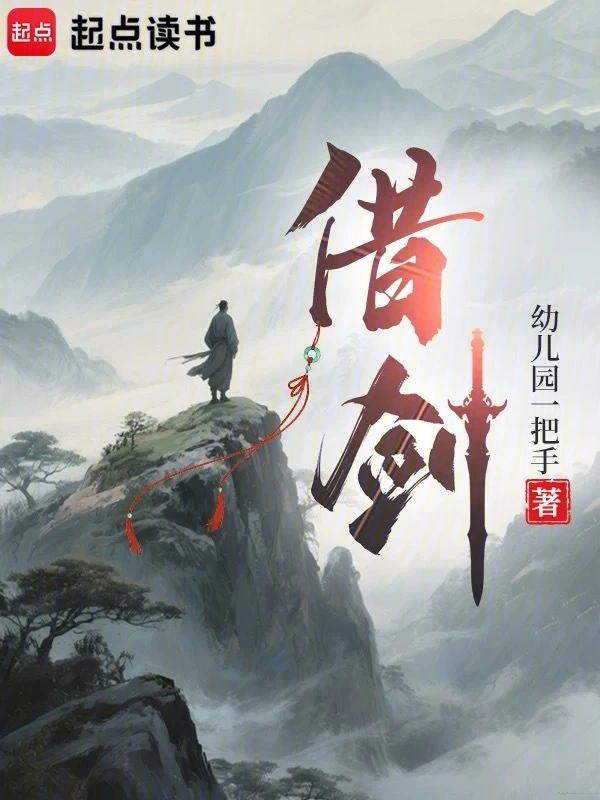
Borrowing the Sword is a fast, witty, game-system xianxia adventure that turns the familiar “trapped in a cultivation world” premise into a sharp, highly entertaining blend of sword dao spectacle, meta-humor, character banter, and escalating immortal-world intrigue.
Who This Book Is For
This novel is for readers who enjoy Chinese web fantasy with a strong game-mechanics backbone, a clever protagonist, sect politics, cultivation breakthroughs, sword techniques, hidden inheritances, and a tone that can move from comedy to high-stakes action without losing momentum. If you like stories where the hero is not simply “chosen by destiny,” but constantly negotiating with systems, factions, identities, and absurdly dangerous situations, Borrowing the Sword has the addictive rhythm of a premium serialized fantasy.
It will especially appeal to fans of cultivation novels that do not take themselves too solemnly. The book has a playful understanding of genre conventions: game worlds, player logic, protagonist templates, sect recruitment, miraculous opportunities, and the old xianxia question of whether power comes from talent, inheritance, luck, or sheer nerve. The result is a story that feels both familiar and self-aware.
Who This Book Is Not For
This book may not be ideal for readers who want a slow, literary, atmosphere-heavy fantasy with minimal comedy or no system elements. The novel leans into web-novel energy: quick hooks, sharp dialogue, genre jokes, escalating power systems, and a protagonist who often benefits from unusual circumstances. Readers who dislike game-world mechanics, meta-commentary, or humorous cultivation setups may find the tone too playful.
It may also be a less comfortable fit for readers who prefer fully completed works, since the novel is still serialized. That ongoing status can be exciting for weekly followers, but frustrating for readers who only want a finished arc.
3 Reasons to Recommend It
It gives the xianxia-game hybrid a fresh comic charge
The central idea is immediately readable: a top-tier game companion enters the world of Borrowing the Sword and discovers that logging out is no longer an option. That premise could easily become another standard transmigration setup, but the novel’s strongest advantage is tone. It understands how absurd a game-logic cultivation world can be, and it uses that absurdity to create momentum rather than parody alone.
The protagonist’s opening situation is almost cinematic: rain, blade, umbrella, danger, and a world that behaves like both a game and a deadly reality. This combination gives the story a clean commercial hook. It is stylish enough for fantasy readers, accessible enough for game-system fans, and funny enough to stand apart from more self-serious cultivation sagas.
Chu Huaixu is the kind of protagonist serialized fiction thrives on
A good web-novel protagonist needs more than power. He needs adaptability, timing, personality, and the ability to make readers want to follow him through hundreds of chapters. Chu Huaixu works because he is not merely dropped into a fantasy world and handed a destiny; he is constantly forced to improvise inside a reality that keeps rewriting the rules around him.
His charm comes from the contrast between danger and attitude. He may be facing sects, swords, inheritances, strange missions, and powerful figures, but the narration gives him enough wit and self-awareness to keep the story light on its feet. That makes the novel easy to binge. Even when the plot turns toward combat or cultivation mysteries, there is usually a spark of humor or personality keeping the scene from becoming mechanical.
The sword-cultivation elements have strong spectacle value
Borrowing the Sword is at its best when it treats sword dao not only as a power system, but as a visual and emotional language. The title itself promises a fantasy built around possession, mastery, inheritance, and the almost mythic relationship between cultivator and blade. The novel’s sword-related concepts give it a strong identity within the crowded xianxia field.
There is a satisfying escalation in the way the story moves from comic premise to larger questions of cultivation, destiny, hidden legacies, and spiritual authority. The result is not just “leveling up,” but the feeling of a protagonist being drawn into a vast mythic structure that existed long before he arrived. That larger scale is what makes the book feel bigger than its initial joke.
One Drawback
The biggest potential drawback is that the book’s humor and genre-awareness may occasionally undercut the gravity of its world. For some readers, that is part of the fun; for others, it may make the danger feel less severe. Because the novel mixes comedy, system mechanics, cultivation drama, and action, readers looking for a solemn, traditional sword immortal epic may need time to adjust to its rhythm.
Editor’s Review
Borrowing the Sword feels like the kind of web novel that knows exactly why readers open a new chapter at midnight and then keep reading far longer than planned. It begins with a clean, irresistible hook: a skilled game companion enters a cultivation game and cannot log out. From there, the novel folds together game logic, xianxia danger, sect-world intrigue, and a protagonist whose greatest weapon may be his ability to read the room before the room kills him.
What makes the book work is not just its premise, but its confidence. The author does not waste time pretending that readers have never seen a transmigration or system setup before. Instead, the story plays with those expectations. It gives us the familiar pleasures of the genre, then adds a teasing, comedic intelligence that makes the material feel newly energized. The result is a fantasy that can laugh at its own conventions while still delivering the satisfaction those conventions promise.
Chu Huaixu is central to that balance. He is not written as a blank power fantasy, but as a protagonist with timing, nerve, and social awareness. He understands performance, positioning, and survival. That background gives him an interesting edge in a cultivation world, where status, perception, and narrative momentum can matter almost as much as raw strength. He is entertaining because he does not simply stumble into destiny; he negotiates with it, jokes around it, and occasionally steals the spotlight from it.
The novel’s game-world structure also helps maintain momentum. Missions, hidden opportunities, sect encounters, sword techniques, and character reveals give the story the satisfying rhythm of progression fantasy. Yet the best moments are not purely mechanical. They come when the book lets the absurdity of its setup collide with the grandeur of xianxia mythology. A sword is not just a weapon. A technique is not just a skill. A sect is not just a location. Everything carries the possibility of history, inheritance, and ridiculous danger.
That is where Borrowing the Sword finds its strongest identity. It is funny without being weightless, commercial without feeling empty, and familiar without becoming stale. Its appeal lies in the friction between modern game-player logic and old-world immortal seriousness. The protagonist may think in systems, but the world around him thinks in bloodlines, legends, masters, enemies, and fate. Watching those two logics clash is the pleasure of the book.
For Western fantasy readers discovering Chinese web novels, Borrowing the Sword would be a strong example of how elastic xianxia has become as a genre. It is not only about closed-door cultivation and heavenly tribulations. It can absorb gaming culture, comedy, meta-fiction, sect politics, romantic tension, and action-adventure pacing while still preserving the grandeur of sword cultivation. For experienced Chinese web-novel readers, the book’s pleasure is different: it offers familiar ingredients, but arranges them with enough humor and polish to feel alive.
Borrowing the Sword is not a quiet novel. It is energetic, talkative, dramatic, funny, and built for serial momentum. But that is exactly why it works. It knows that the modern cultivation reader wants spectacle, personality, progression, and a protagonist worth following. On those terms, it delivers.
|




 千斤顶
千斤顶











 English
 简体中文
简体中文 繁體中文
繁體中文 한국 사람
한국 사람 日本語
日本語 Deutsch
 русский
 بالعربية
 TÜRKÇE
 português
 คนไทย
คนไทย french